

What Companion Planting Actually Means
Companion planting isn't a single technique - it's an umbrella term for several different mechanisms through which plants can influence one another. Understanding those mechanisms helps separate genuinely useful pairings from ones that sound good but lack real-world support.
The main mechanisms include:
- Nitrogen fixation: Legumes like beans and peas host soil bacteria that convert atmospheric nitrogen into a form other plants can use.
- Pest deterrence: Aromatic plants may confuse or repel specific pests through scent or by masking the host plant.
- Beneficial insect attraction: Flowering plants draw in pollinators and predatory insects that feed on common garden pests.
- Physical interaction: Tall plants can shade low-growing neighbors, or sprawling plants can suppress weeds that would otherwise compete with upright crops.
- Allelopathy: Some plants release chemicals that suppress or stimulate the growth of nearby species - this can be either helpful or harmful.
Keeping these categories in mind makes it easier to evaluate any claimed pairing. Ask: what is the mechanism, and is there evidence it works in real garden conditions?
Folklore vs. Evidence: A Useful Distinction
Many companion planting recommendations originate in traditional farming practice, passed down through generations before modern plant science existed. That doesn't make them wrong, but it does mean they haven't all been tested under controlled conditions. When a source explains the mechanism - how the pairing works - it's generally more trustworthy than one that simply asserts a benefit. If you're reading your garden for signs of stress, understanding plant interactions can help you diagnose problems more accurately.
Pairings With Genuine Evidence Behind Them
A handful of companion planting combinations have held up to scrutiny and are widely used in both home and commercial gardens.
The Three Sisters: Corn, Beans, and Squash
This is arguably the best-documented companion planting system in North America, practiced by Indigenous farmers for centuries and studied more formally in modern horticulture. Corn provides a natural trellis for climbing beans. Beans fix nitrogen that feeds the other two crops. Squash spreads across the ground, shading out weeds and retaining soil moisture. The three crops use space and resources in complementary rather than competing ways.
Tomatoes and Basil
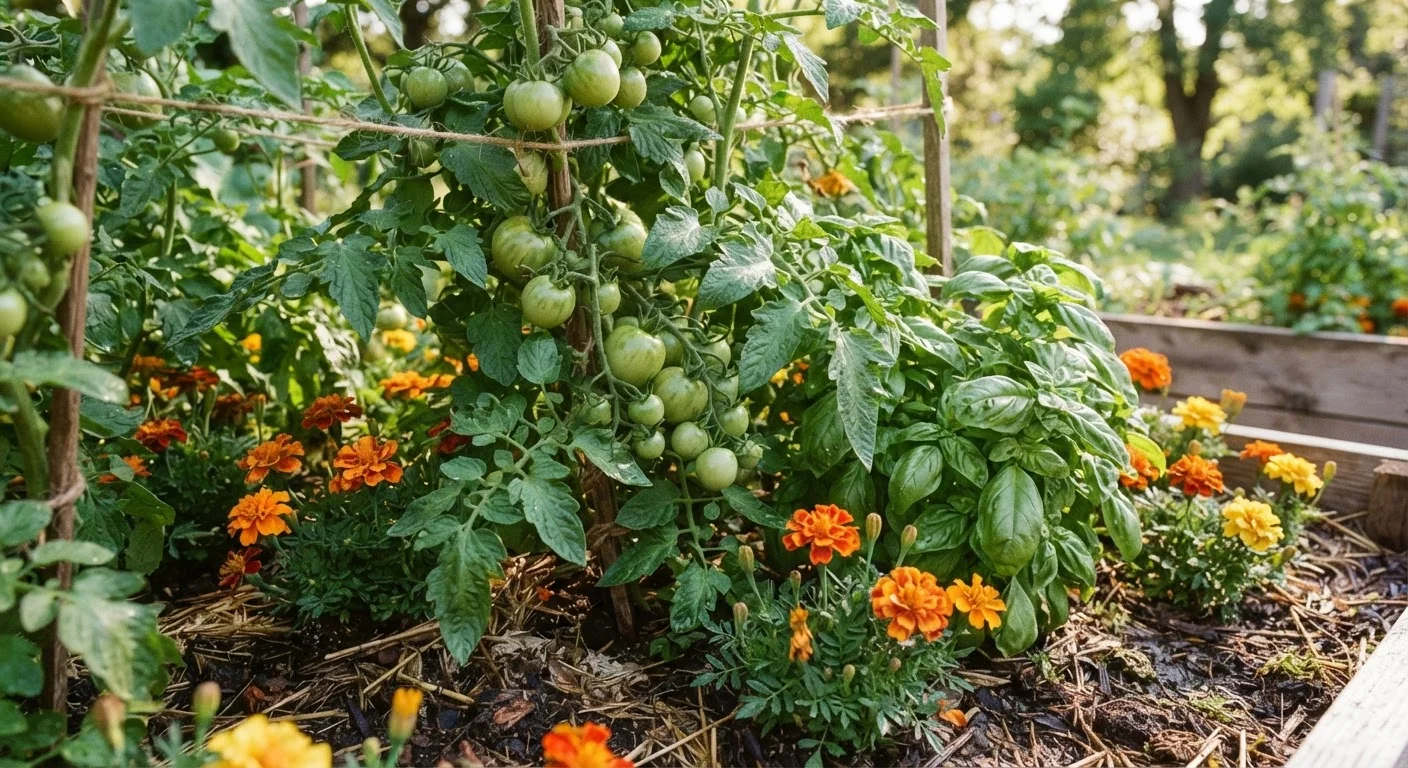
This is one of the most popular pairings in home gardens. Research on whether basil genuinely repels tomato pests is mixed, but basil does attract pollinators and beneficial insects. Practically, the two plants have compatible water and sunlight needs, making them convenient neighbors even if the pest-repelling effect isn't guaranteed.
Brassicas and Nasturtiums
Nasturtiums are often used as a trap crop near brassicas like cabbage and kale. Aphids are strongly attracted to nasturtiums, which can draw them away from the main crop. This works best when nasturtiums are monitored and managed - if aphid populations explode on the trap plant, they may eventually move on to the primary crop. For more on managing pests without chemicals, see natural pest control methods.
3,000+
Years the Three Sisters system has been practiced
Archaeological and historical evidence indicates Indigenous communities in North America cultivated corn, beans, and squash together for thousands of years before European contact.
~20%
Potential reduction in aphid damage with trap crops
Some field studies on trap cropping in vegetable production have found measurable reductions in pest damage to primary crops, though results vary significantly by crop, pest species, and management approach.
200 lbs/acre
Nitrogen beans can fix per season
University extension research commonly cites estimates in this range for nitrogen fixed by bean crops, though actual amounts depend heavily on soil conditions, bacterial inoculant presence, and variety.
Common Claims That Don't Hold Up as Well
Not every popular companion planting pairing has strong evidence behind it. Being aware of the shakier claims helps you spend garden space and effort wisely.
Carrots and Onions
The idea that carrot fly and onion fly repel each other's pests has been repeated widely, but controlled studies have generally found the effect to be small and unreliable. It's not a harmful pairing, but gardeners who rely heavily on it for pest control may be disappointed.
Chamomile as a Universal Companion
Chamomile is often described as benefiting almost everything around it. In reality, its main value is as a pollinator attractor - which is genuinely useful but far more modest than the sweeping claims suggest. It's a worthwhile plant in its own right, not a garden cure-all.
When evaluating any companion planting claim, it's fair to ask: has this been tested in conditions similar to your own garden? Variables like climate, soil type, pest populations, and plant density all affect outcomes. Understanding your plants' broader needs - including whether they suit raised beds or in-ground planting - often matters more than companion choices alone.
Test One New Pairing Per Season
Rather than overhauling your entire garden layout around companion planting, introduce one or two new pairings each growing season and keep a simple log of what you observe. This methodical approach lets you identify what genuinely works in your specific conditions - soil type, local pest pressure, and microclimate all influence outcomes. After a few seasons, you'll have reliable data that applies directly to your garden rather than someone else's.
How to Approach Companion Planting Practically
Companion planting is most useful when treated as an experiment rather than a formula. Here are practical steps to apply it thoughtfully:
- Start with well-documented pairings. Use combinations like the Three Sisters or nasturtiums with brassicas as your starting point, since they have more evidence behind them.
- Keep notes across seasons. Track what you planted together, what pest pressure looked like, and what yields resulted. One season's observations aren't enough to draw conclusions.
- Don't crowd plants. Companion planting should never compromise the spacing needs of your primary crop. Competition for light and nutrients can easily offset any companion benefit.
- Combine companion planting with other practices. Crop rotation, mulching, and soil improvement will generally have a more significant impact on garden health than any companion pairing. See our guide to planning with annuals and perennials for a broader view of garden design.
- Be skeptical of folklore. If a pairing is described with dramatic claims and no mechanism is explained, look for additional sources before committing garden space to it.
Used with realistic expectations, companion planting adds diversity to your garden, supports beneficial insects, and can reduce some pest pressure - all genuine gains, even if results aren't transformative every season.
Frequently Asked Questions
Some pairings have meaningful research support, particularly those involving nitrogen fixation or physical pest barriers. Others are based on gardening tradition and may vary in effectiveness. Treating companion planting as one useful tool among many - rather than a guaranteed fix - sets realistic expectations.
Some combinations are genuinely problematic: fennel, for example, is allelopathic - it releases compounds that can inhibit the growth of nearby plants including tomatoes, peppers, and beans. Brassicas and strawberries are also generally poor neighbors. When in doubt, research the specific pairing before planting.
Companion planting can reduce pest pressure in some cases, but it is unlikely to eliminate the need for any other form of pest management. It works best as part of an integrated approach that also includes crop rotation, physical barriers, and good garden hygiene.
Generally, companion plants should be close enough to interact - within one to three feet - but not so crowded that they compete for light, water, or nutrients. Exact spacing depends on the mature size of each plant and the type of benefit you're aiming for.
French marigolds (Tagetes patula) have shown some evidence of reducing root-knot nematode populations when planted densely and left in the soil. Their effect on aphids and whiteflies aboveground is less definitive, though they do attract beneficial insects. They are a reasonable addition to the garden even if results aren't guaranteed.
The content on this site is for informational purposes only and is not a substitute for professional advice. Always consult a qualified professional for guidance specific to your situation.