

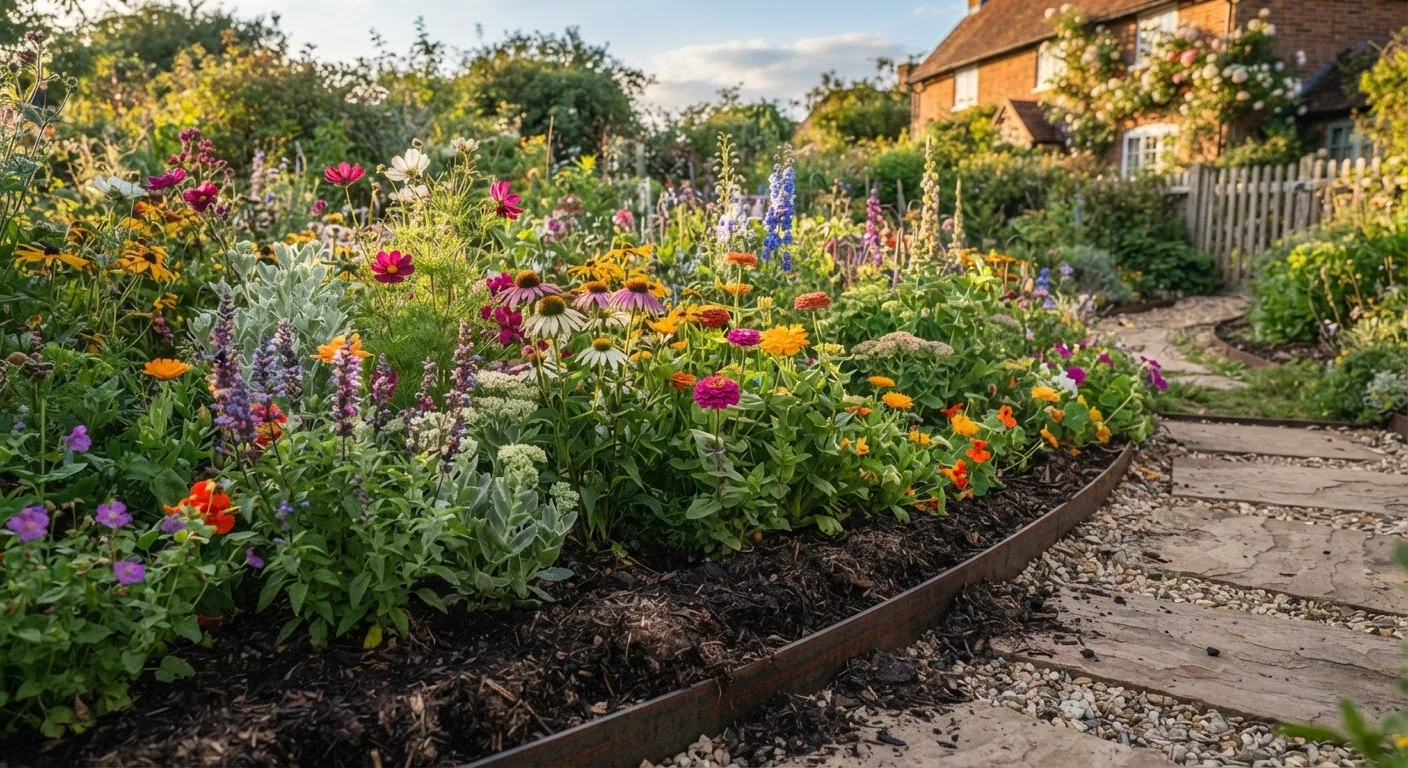
Option A
Annual Plants
The seasonal showstoppers that bloom hard and fast.
Best for: Gardeners who want maximum color flexibility and are willing to replant each season.
Option B
Perennial Plants
The dependable backbone that returns year after year.
Best for: Gardeners seeking a low-replanting foundation that builds structure and savings over time.
What Sets Annuals and Perennials Apart
The single most useful distinction in plant selection is understanding how long a plant lives. Annuals germinate, grow, flower, set seed, and die - all within one growing season. Common examples include marigolds, zinnias, impatiens, and petunias. Because they put all their energy into flowering quickly, they tend to produce more continuous blooms over a longer stretch of time than most perennials.
Perennials, by contrast, die back to their roots at the end of the season but regrow the following spring. Coneflowers, hostas, black-eyed Susans, and daylilies are familiar examples. They may take a season or two to reach their full size and bloom potential - gardeners often say "the first year they sleep, the second year they creep, the third year they leap" - but once established, they return reliably with minimal effort.
A third category worth knowing: biennials, which complete their life cycle over two years, blooming in the second. Foxgloves and hollyhocks are biennials, though they're often sold and treated alongside perennials. If you're just starting out in gardening, focusing on true annuals and perennials keeps things manageable.
How Annuals and Perennials Compare Side by Side
Understanding the practical differences helps you make smarter planting decisions - especially when balancing cost, labor, and visual goals.
| Criterion | Annual Plants | Perennial Plants |
|---|---|---|
| Life Cycle | One growing season | Returns for many years |
| Bloom Duration | Often all season long | Typically a few weeks per year |
| Replanting Required | Every year | Rarely, once established |
| Upfront Cost | Lower per plant | Higher per plant |
| Long-term Cost | Ongoing seasonal expense | Lower after first few years |
| Design Flexibility | Very high - change each season | Lower - plants grow in place |
| Time to Establish | Blooms quickly in year one | May take 2-3 seasons to peak |
| Maintenance Pattern | Consistent throughout season | Periodic, task-based |
One factor the table can't capture is timing. Perennials often have a defined bloom window of a few weeks to a couple of months, whereas a well-chosen annual will flower from late spring until the first frost. This is why most experienced gardeners use both types together rather than committing entirely to one.
Building a Garden That Combines Both Effectively
The most resilient, attractive gardens treat perennials as a framework and annuals as a flexible layer on top. Here's how to think about that in practice:
- Start with perennial structure. Plant perennials in your beds first - they define the space and provide reliable shape each year. Group them by bloom time so something is always in flower throughout the season.
- Fill gaps with annuals. In the first year especially, perennials won't cover much ground. Annuals fill those spaces beautifully while the perennials establish. As perennials spread, you'll need fewer annuals to fill gaps.
- Use annuals for color control. If you want to change a color scheme or try a new variety, annuals let you do that without digging up the whole bed. Plant them in front of or between perennial clumps.
- Plan for succession. Choose annuals that peak when your perennials are resting. If your coneflowers bloom in midsummer, pair them with cool-season annuals like pansies that thrive in spring and fall.
For more help thinking about plant combinations, our guide on companion planting explores which plant pairings have genuine benefits beyond aesthetics.
2-3 Years
Typical time for perennials to fully establish
Most perennial plants reach their mature size and full bloom potential within two to three growing seasons after planting.
30-50%
Portion of a well-planned garden often covered by perennials
Many experienced gardeners recommend a perennial base of roughly one-third to one-half of total planting area, supplemented by annuals.
Maintenance Expectations Over Time
A common misconception is that perennials are truly "no maintenance." They still need periodic division (splitting clumps every few years to maintain vigor), deadheading, and seasonal cleanup. However, their demands are concentrated - a few tasks at defined times - rather than requiring ongoing replanting labor.
Annuals demand more consistent attention: watering, fertilizing, deadheading to extend bloom, and full replanting each season. The upside is that this active engagement gives you opportunities to change, improve, and experiment with your garden every year.
If reducing overall maintenance is a goal, a perennial-heavy design makes sense. Our article on designing a low-maintenance garden walks through landscaping strategies that keep upkeep light without sacrificing visual appeal. You can also cross-reference a year-round maintenance calendar to stay on top of seasonal tasks for both plant types.
Hardy vs. Half-Hardy Annuals
Not all annuals behave the same in cold weather. Hardy annuals - such as pansies and snapdragons - can tolerate light frost and are often planted in early spring or fall. Half-hardy annuals like impatiens and begonias need warm temperatures and should only go in the ground after the last frost date in your area. Knowing which category an annual falls into helps you time planting correctly and extend your season.
The content on this site is for informational purposes only and is not a substitute for professional advice. Always consult a qualified professional for guidance specific to your situation.