

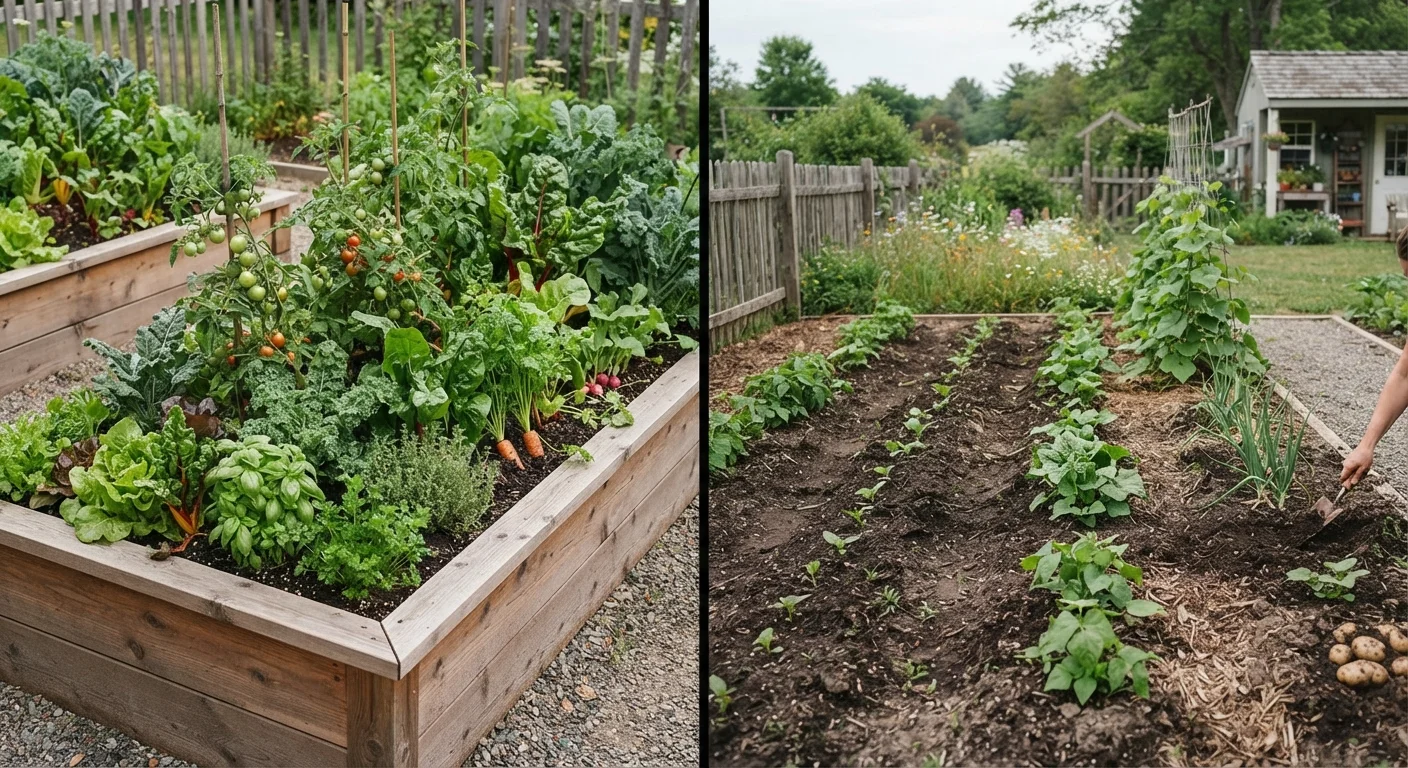
Option A
Raised Beds
The controlled, accessible growing environment.
Best for: Gardeners dealing with poor native soil, limited mobility, or compact spaces who want defined, manageable growing areas.
Option B
In-Ground Planting
The traditional, large-scale growing approach.
Best for: Gardeners with healthy native soil, ample space, and plans to grow crops over a wide area at lower upfront cost.
Why the Choice Matters More Than You Might Think
Choosing between raised beds and in-ground planting isn't just a matter of aesthetics — it shapes how you manage soil, water, weeds, and even your own physical effort every single season. Both approaches have produced thriving gardens for generations, but each works best in specific conditions.
If you're starting a garden from scratch, understanding this trade-off early prevents costly mistakes later. The right choice depends on the soil you already have, the crops you want to grow, your budget, and your physical situation — not on trends or what your neighbor is doing.
| Criterion | Raised Beds | In-Ground Planting |
|---|---|---|
| Upfront cost | Higher (materials + fill soil) | Lower (amend existing soil) |
| Soil control | Complete — custom mix | Dependent on native soil quality |
| Drainage | Excellent; dries out faster | Variable; can waterlog |
| Weed pressure | Lower at setup; increases over time | Higher; persistent weed seed bank |
| Soil warming in spring | Warms several weeks earlier | Warms more slowly |
| Root depth | Limited by bed depth | Unrestricted |
| Accessibility | Excellent when built tall | Requires bending and kneeling |
| Scalability | Requires additional materials | Expand easily at low cost |
Raised Beds: What They Do Well (and Where They Fall Short)
Raised beds — frames typically built from wood, metal, or composite material and filled with a custom soil mix — give you complete control over your growing environment from day one. That's their defining advantage.
Key Strengths
- Soil quality on your terms: You fill the bed with exactly the mix your plants need, bypassing whatever compacted clay or rocky ground lies beneath.
- Drainage: Well-constructed raised beds drain efficiently, reducing the risk of waterlogged roots that rot crops.
- Warmer soil: Elevated soil warms several weeks earlier in spring, which is a genuine advantage in short-season climates.
- Weed pressure: Starting with clean fill mix and adding a cardboard barrier underneath cuts weed establishment significantly in the first few seasons.
- Accessibility: A bed built 18 inches or taller reduces the need to kneel or bend, which matters greatly for gardeners with mobility limitations.
Real Limitations
- Upfront cost: Materials for a single 4×8-foot bed — frame, hardware, quality soil mix — can run $150–$400 depending on materials and region. That cost multiplies with each additional bed.
- Soil dries out faster: The same drainage that protects roots means more frequent watering, especially in hot or windy locations.
- Shallow depth restricts some crops: Standard 10–12-inch beds limit deep-rooted vegetables like parsnips, carrots grown to full length, or large squash.
Always prepare your bed thoroughly before planting — even a raised bed will underperform if the soil mix is poorly chosen or compacted during filling.
6–8 weeks
Earlier planting possible with raised beds
Raised bed soil can warm significantly ahead of native ground in spring, according to general horticultural guidance from university extension programs.
4×8 ft
Standard raised bed size for accessibility
A 4-foot width allows most gardeners to reach the center from either side without stepping in, a widely recommended ergonomic guideline.
6.0–7.0
Ideal soil pH range for most vegetables
Most vegetable crops perform best in a slightly acidic to neutral pH range, per USDA and cooperative extension soil guidelines.
In-Ground Planting: Simplicity, Scale, and the Soil Question
In-ground planting — working directly with your existing native soil, amended as needed — remains the most widely practiced gardening method for good reason: it's scalable, low-cost, and well-suited to many crops.
Key Strengths
- Lower startup cost: If your soil is workable, the main investment is compost, basic tools, and seeds or transplants.
- Unlimited root depth: Crops with deep or spreading root systems — corn, melons, winter squash, potatoes — thrive with unrestricted soil access.
- Moisture retention: Native soil, especially clay-heavy ground, holds moisture longer, reducing irrigation frequency in dry spells.
- Scale easily: Expanding an in-ground plot means breaking more ground, not buying more materials.
Real Limitations
- Soil quality is the wild card: Heavy clay, sandy soil, or contaminated ground requires substantial amendment before it supports healthy plants. Soil testing and preparation are non-negotiable starting steps.
- Weed pressure is higher: Native soil contains weed seeds that germinate throughout the season, requiring consistent management.
- Drainage problems are harder to fix: Poorly draining spots can waterlog roots with few quick remedies short of raised beds or French drains.
- Physical demand: Kneeling, bending, and working low to the ground for extended periods is harder on joints and backs.
Pairing in-ground planting with strategies like companion planting can help suppress weeds naturally while improving overall yield.
Soil Testing Is Worth the Step
Before building raised beds or breaking ground for an in-ground plot, a basic soil test removes guesswork about pH, nutrient levels, and potential contaminants. Many state cooperative extension services offer affordable testing kits or lab submissions. Knowing what you're working with helps you amend efficiently rather than guessing — and avoids wasting money on fertilizers your soil doesn't need.
Making the Decision: Which One Fits Your Situation?
For most gardeners, the clearest guide is this: start with your soil. Have a basic soil test done — many local cooperative extension offices offer low-cost testing — before committing to either approach. If your results show good organic matter, appropriate pH (generally 6.0–7.0 for most vegetables), and workable texture, in-ground planting is a sensible, economical starting point.
If your soil is compacted, heavily clay-based, sandy, or if you're uncertain about past land use (older urban lots sometimes have elevated lead levels), raised beds let you sidestep those problems entirely with clean fill.
Budget matters too. If upfront cost is a significant constraint, an in-ground plot amended with compost gives you a productive garden without the expense of bed materials. If you have the budget and value the ergonomic and soil-control benefits, raised beds are a worthwhile investment that pays dividends in ease and consistency season after season.
Some gardeners use both: raised beds for high-value crops like tomatoes, herbs, and salad greens where soil quality and drainage are critical, and in-ground rows for bulk crops like beans, squash, or potatoes. That combination is worth considering as your garden grows. You may also want to explore container gardening if space is particularly tight — it's another practical option that complements both approaches.
Whatever method you choose, soil nutrition will drive your results. Understanding how organic and synthetic fertilisers affect your soil is a logical next step once your beds or plots are established.
The content on this site is for informational purposes only and is not a substitute for professional advice. Always consult a qualified professional for guidance specific to your situation.