

Why Non-Chemical Pest Management Makes Sense
Reaching for a broad-spectrum pesticide spray is tempting when something is chewing your tomatoes, but chemical interventions often eliminate the beneficial insects doing quiet, valuable work in your garden at the same time. Predatory wasps, ground beetles, and pollinating bees are all vulnerable to many common pesticide formulations.
Natural pest management isn't about accepting crop losses - it's about building a garden that regulates itself as much as possible. The methods below are practical, grounded in established horticultural principles, and scalable from a container on a balcony to a large vegetable plot. For container-specific advice, see our container gardening guide.
Physical Barriers
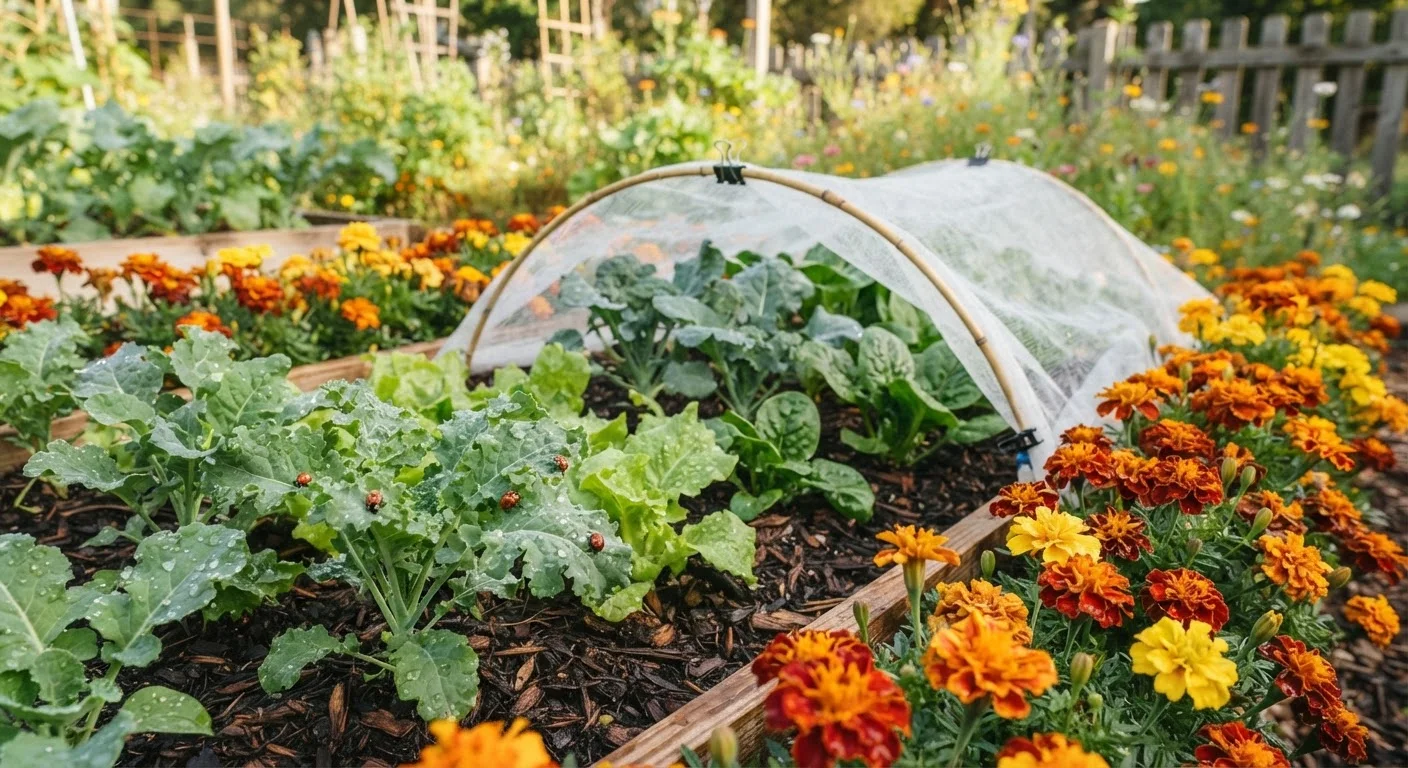
Lightweight row covers made from spun polyester fabric are one of the most reliable tools available to home gardeners. Draped loosely over seedlings and secured at the edges, they block flying insects - including cabbage moths, squash vine borers, and aphid-carrying flies - without restricting light or airflow significantly. Remove them when plants need pollination or once the main pest window has passed.
For slugs and snails, copper tape applied around container rims or raised-bed edges creates a mild deterrent; slugs dislike crossing copper because it interferes with their mucus. Sticky traps placed near affected plants can monitor and reduce populations of whiteflies and fungus gnats without broad ecological impact.
Row covers block flying pests at the source without harming beneficial insects nearby.
Encouraging Beneficial Insects
Ladybugs, lacewings, parasitic wasps, and ground beetles are natural predators that feed on aphids, caterpillar eggs, and other soft-bodied pests. The best way to attract and retain them is to provide what they need: nectar sources, undisturbed habitat, and freedom from chemical disruption.
Plant small-flowered species - dill, fennel, yarrow, phacelia - in or around vegetable beds. These provide nectar and pollen for adult beneficials. Leaving a patch of leaf litter or a simple insect hotel gives ground-dwelling predators shelter. Avoid tidying the garden too thoroughly in autumn, as many beneficial insects overwinter in hollow stems and debris.
Planting fennel or yarrow near vegetable beds actively draws in predatory insects.
Companion Planting
Some plant pairings have solid evidence behind them. Basil planted near tomatoes may help deter thrips. Nasturtiums act as trap crops, drawing aphids away from more valuable plants so you can remove the infested growth. Marigolds (Tagetes species) release compounds that suppress certain soil nematodes when grown densely and turned into the soil.
It's worth approaching companion planting with measured expectations - not every folk pairing holds up under scrutiny. For a fuller look at which combinations have genuine backing, our companion planting guide separates established practice from garden folklore.
Nasturtiums work as trap crops, pulling aphids away from plants you want to protect.
Cultural Practices and Garden Hygiene
Many pest problems are intensified by conditions gardeners inadvertently create. Overcrowded plants trap humidity and create entry points for fungal disease alongside pest colonisation. Crop rotation - moving plant families to different beds each season - disrupts the lifecycle of soil-dwelling pests like onion fly and clubroot.
Removing diseased or heavily infested plant material promptly, rather than composting it, cuts off breeding sites. Watering at the base of plants rather than overhead keeps foliage drier and less hospitable to fungal issues that weaken plants and attract secondary pests. These habits require little extra effort once they become routine.
Rotating crops each season breaks pest lifecycles more effectively than most sprays.
Targeted Biological Controls
When pest pressure is high and other methods aren't keeping pace, biological controls offer a targeted option without broad chemical impact. Bacillus thuringiensis (Bt) is a naturally occurring soil bacterium available in commercial preparations that affects caterpillar larvae specifically - it breaks down quickly and does not persist in the environment.
Nematodes - microscopic roundworms - can be watered into moist soil to target specific pests including vine weevil grubs, leatherjackets, and slug eggs. Different nematode species target different pests, so matching the right nematode to your problem matters. These products are typically sold through garden centers or mail-order suppliers and have defined application windows based on soil temperature.
Soil-applied nematodes target specific underground pests without affecting surface-level beneficial insects.
Building a More Resilient Garden Long-Term
The most effective pest management happens before problems appear. Choosing plants suited to your local conditions, maintaining healthy soil, and diversifying what you grow all reduce the conditions that allow pest populations to explode. Native plants are particularly valuable here - they've co-evolved with local predators that help keep pest species balanced. Our article on native plant benefits explores this in depth.
Start With Observation, Not Intervention
Before taking action on any pest, spend a few days monitoring the situation. Many pest populations are naturally checked by predators within one to two weeks if the garden supports a healthy insect community. Acting too early - even with natural methods - can interrupt that balance. A simple garden journal tracking what you see and when helps you spot genuine outbreaks versus temporary fluctuations.
Pairing these methods thoughtfully also connects to broader garden design. A low-maintenance garden layout that incorporates flowering borders, good air circulation, and easy-clean paths naturally limits the pest-friendly microclimates where problems tend to start.
The content on this site is for informational purposes only and is not a substitute for professional advice. Always consult a qualified professional for guidance specific to your situation.