

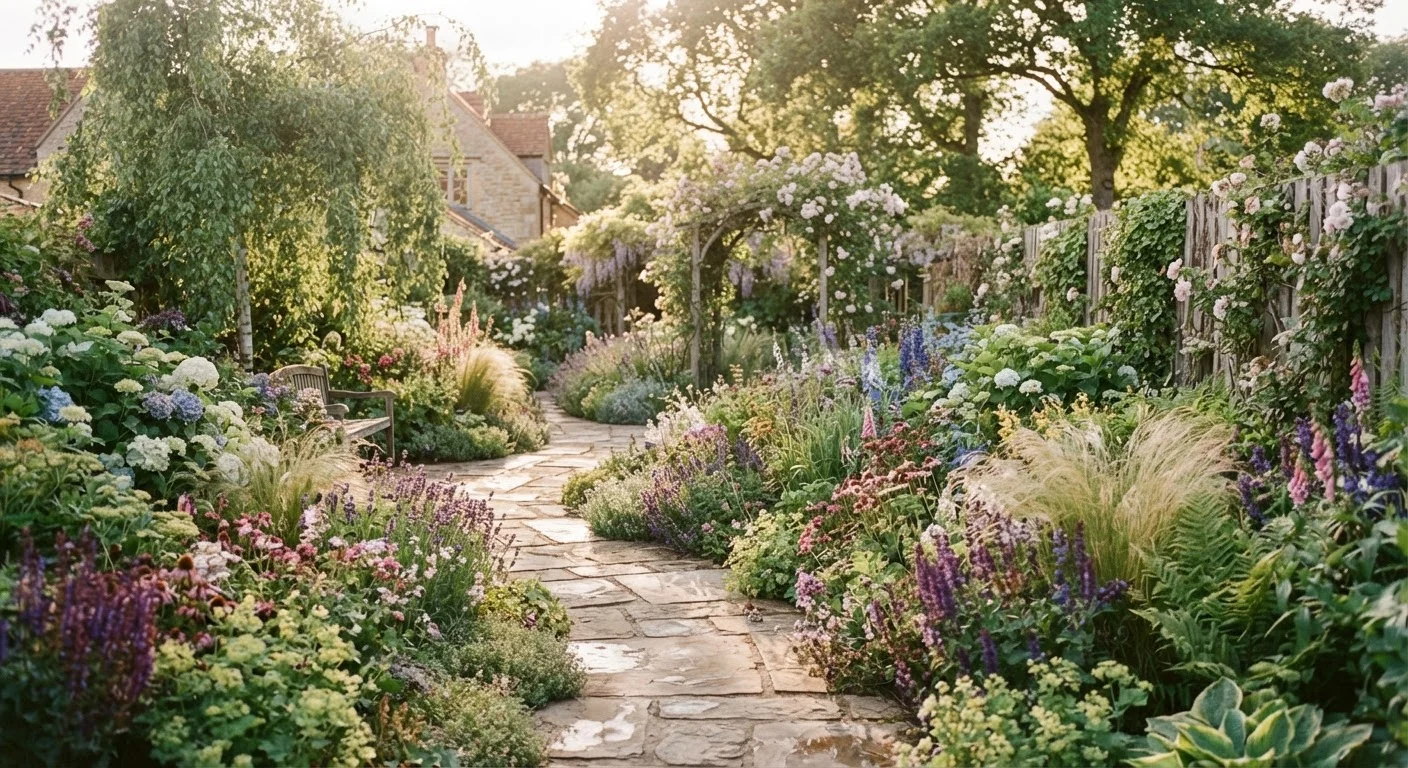
Start With the Right Plants in the Right Place
The single biggest source of garden maintenance is putting plants in conditions they aren't suited to - then compensating with extra watering, feeding, and pest management. Matching each plant to your soil type, sun exposure, and local climate eliminates most of that effort before it starts.
Begin by observing your garden through the seasons. Note where sun falls for more than six hours a day, where water pools after rain, and which areas dry out quickly. These patterns determine what will genuinely thrive rather than merely survive.
Plants adapted to your region - particularly native species - tend to establish faster and need less ongoing care. As we explore in our guide to native plants, locally adapted species often require less watering, feeding, and pest control once established. That said, non-native ornamentals can still be low-maintenance choices if they're suited to your hardiness zone and soil conditions.
Test Your Soil Before You Plant
A basic soil test - available through most cooperative extension services for a small fee - tells you your pH, nutrient levels, and texture. This information lets you choose plants that will genuinely thrive rather than guessing. Correcting soil deficiencies before planting is far less work than nursing struggling plants for years afterward.
Use Structure and Hardscaping to Do the Heavy Lifting
A garden that relies entirely on seasonal flowers demands constant replanting and deadheading. One anchored by structure - evergreen shrubs, ornamental grasses, shaped hedges, and hardscape elements like gravel paths or stone edging - retains its form and visual interest even in the depths of winter.
Think of structural plants as the garden's skeleton. Evergreen specimens such as boxwood, yew, or dwarf conifers hold their shape year-round. Deciduous shrubs with good branching habits add winter silhouette. Ornamental grasses move beautifully in wind and provide seed heads that feed birds well into autumn.
50%+
Weed reduction from consistent mulching
Horticultural studies consistently show that a 2-3 inch organic mulch layer can reduce weed emergence by more than half compared to bare soil.
30%
Water savings from hydrozoning
Landscape water-use research from US cooperative extension programs suggests grouping plants by water need can reduce garden irrigation by roughly 30% compared to uniform watering.
Hardscaping reduces the surface area that needs planting and maintenance. A gravel mulch or stone-edged bed requires no mowing and suppresses weeds effectively. Even a simple brick or timber border between lawn and beds cuts down the time spent on edging.
Mulch, Group, and Simplify Your Watering
A 2-3 inch layer of organic mulch - shredded bark, wood chips, or composted leaves - is one of the most powerful low-maintenance tools available. It suppresses weed germination, slows moisture evaporation, moderates soil temperature, and breaks down gradually to improve soil structure. Refresh it annually and you'll spend significantly less time weeding.
Water efficiency follows naturally when plants are grouped by need - a principle landscapers call hydrozoning. Place drought-tolerant Mediterranean herbs and ornamental grasses together in a sunny, well-drained bed. Reserve the shadier, damper corner for moisture-loving ferns or astilbes. This way a single watering session covers an entire zone without over- or under-watering individual plants.
Drip Irrigation Can Simplify Watering Further
A simple drip irrigation system or soaker hose laid beneath mulch delivers water directly to root zones, reducing evaporation and fungal disease risk from overhead watering. Many systems can be connected to a basic timer, automating the task almost entirely. Installation is generally within the reach of a confident DIYer, though a licensed plumber should be consulted for any connections to your home's main water supply.
If you're building a garden from the ground up, our beginner's garden guide covers soil preparation and layout planning that will set a low-maintenance design up for success from the start.
Choose Perennials and Self-Seeders Over Annual Replanting
Annual flowers are vivid but labour-intensive - they must be replanted each season, fed frequently, and deadheaded constantly to maintain bloom. Perennials, by contrast, return each year from the same root system, spreading gradually to fill gaps and requiring little more than a late-winter cut-back.
Reliable, low-fuss perennials for US gardens include coneflowers (Echinacea), black-eyed Susans (Rudbeckia), catmint (Nepeta), daylilies, and salvia. These bloom for extended periods, tolerate varying conditions, and tend to resist deer and common pests.
Some plants - fennel, California poppy, foxglove - self-seed freely, naturalising over time without any intervention. Allow a few seed heads to scatter each autumn and you'll find new plants appearing where they're best suited, creating an effortlessly naturalistic look.
For managing the occasional pest outbreak without disrupting beneficial insects or soil ecology, natural pest control methods are worth building into your low-maintenance toolkit.
Maintain a Simple Seasonal Rhythm
Low-maintenance doesn't mean no maintenance - it means consolidating tasks into a predictable, manageable rhythm. Most well-designed gardens need only a few key interventions per year: a late-winter tidy and cut-back, a spring mulch refresh, summer deadheading of repeat-bloomers, and an autumn clean-up.
Resist the impulse to over-tidy. Leaving seed heads and some dead stems through winter provides habitat for beneficial insects and birds, adds structural interest, and protects crowns from hard frosts. A garden that looks slightly wilder in January often rewards you with a healthier spring.
Our seasonal garden maintenance reference breaks down exactly which tasks belong to each month, so nothing important gets missed and you're never scrambling to catch up.
“The garden that works with nature - soil, climate, and local ecology - will always outperform the garden that works against it. Effort spent in design pays dividends in every season that follows.”
— Extension Horticulture Principle, Widely cited maxim in US cooperative extension gardening education
The content on this site is for informational purposes only and is not a substitute for professional advice. Always consult a qualified professional for guidance specific to your situation.