

Our Verdict
Native plants offer genuine ecological and practical advantages — particularly reduced water use, improved soil health, and wildlife support — that hold up under scrutiny. However, they require patience during establishment and thoughtful sourcing to deliver on their promise. The benefits are real, but so are the initial hurdles.
Gardeners willing to invest time upfront, prioritize ecological value, and work with their regional climate rather than against it.
What 'Native' Actually Means
A native plant is one that evolved in a specific region without human introduction — adapted over thousands of years to local soils, rainfall patterns, temperature swings, and the insects and animals that share that ecosystem. In the US, nativity is typically defined at the regional or ecoregion level, not just by state. A plant native to coastal Carolina may not be native to the Piedmont foothills just a few hundred miles away.
This distinction matters practically. When garden centers label something as "native," they may mean native to North America broadly, or they may mean native to your specific region. Asking where a plant's seed stock originates — known as its ecotype — is worth doing. Local ecotypes have co-evolved with local pollinators and soil microbes, which is where much of the ecological benefit comes from.
Local Ecotype vs. Native Cultivar
Not all plants labeled 'native' carry equal ecological weight. A straight species grown from local seed stock — called a local ecotype — has co-evolved with the insects and fungi in your specific region. Cultivated varieties ('nativars'), bred for showier flowers or compact growth, may look similar but can offer reduced value to specialist pollinators. When possible, seek out straight species from reputable native plant nurseries or regional plant sales.
The Real Ecological Benefits
The strongest case for native plants is ecological. Research consistently shows that native plant communities support significantly more insect diversity than non-native plantings — and insects underpin nearly every terrestrial food web. Native oaks alone are documented hosts for hundreds of caterpillar species, which are critical food for nesting birds.
Reduced water needs after establishment
Native plants are adapted to local rainfall patterns, meaning established specimens typically survive dry spells without supplemental irrigation that non-natives require.
Supports pollinators and native insects
Native plants and native insects have co-evolved, making them far more valuable as habitat than most ornamental imports. This directly supports pollinator populations under pressure across the US.
Builds deeper, healthier soil structure
Many native plants develop extensive root systems that improve soil drainage, aeration, and microbial activity — benefits that compound over multiple seasons.
Lower fertilizer dependency
Because they're adapted to regional soil conditions, most native plants thrive without added fertilizers, reducing both cost and runoff risk.
Greater long-term resilience
Established native plantings tend to withstand local weather extremes — late frosts, summer heat, or periodic drought — better than plants sourced from very different climates.
Beyond wildlife, native plants tend to build healthier soil over time. Their root systems — often far deeper than those of ornamental imports — improve drainage, reduce compaction, and support mycorrhizal fungal networks. This translates to a garden that becomes more self-sustaining with age. For a broader approach to supporting beneficial garden life, see our guide on natural pest control methods.
96%
Of land birds that rely on insects to feed young
Entomologist Doug Tallamy's research highlights that nearly all terrestrial bird species depend on insect-rich habitats supported by native plant communities.
4x
More native bee species on native vs. non-native plants
Studies comparing native and non-native plantings in suburban gardens have found native plants host substantially greater native bee diversity and abundance.
Honest Limitations Worth Knowing
The idea that native plants are universally easy is one of the most persistent misconceptions in gardening. The reality is more nuanced.
Slow, demanding establishment period
The first one to two seasons require consistent watering and weeding. Expecting low maintenance immediately after planting leads to disappointment and plant loss.
Limited availability at mainstream garden centers
True local ecotypes are often only stocked at native plant nurseries or through plant sales hosted by native plant societies — requiring more research and effort to source.
Some species spread aggressively
Certain natives — particularly some grasses, goldenrods, and running groundcovers — can colonize areas beyond their intended planting if not managed, requiring periodic thinning.
HOA or municipal restrictions may apply
Informal or meadow-style native plantings can run into local ordinances governing plant height or perceived "weed" growth, particularly in front yards or suburban settings.
Cultivated varieties may reduce ecological value
Many native cultivars bred for unusual flower color or compact form have been shown in research to offer less value to specialist pollinators than straight species grown from local seed.
First, establishment is the hard part. Most native perennials and shrubs spend their first one to two growing seasons pushing roots rather than producing visible top growth — a phase sometimes called "sleep, creep, leap." During this window they still need watering, weeding, and monitoring. Patience is genuinely required.
Second, "native" does not mean weed-free. Native species can self-seed aggressively, and some — like certain goldenrods or prairie grasses — spread vigorously if not managed. Understanding each plant's growth habit before you place it saves significant rework later. Our article on reading your garden's distress signals can help you distinguish normal establishment behavior from genuine problems.
Design and Aesthetic Considerations
One practical concern for many homeowners is appearance. Native meadow plantings and informal wildflower patches can attract attention from neighbors or homeowner associations who expect a more traditional manicured look. This isn't just an aesthetic preference — some localities have ordinances governing plant height or "weed" coverage in front yards.
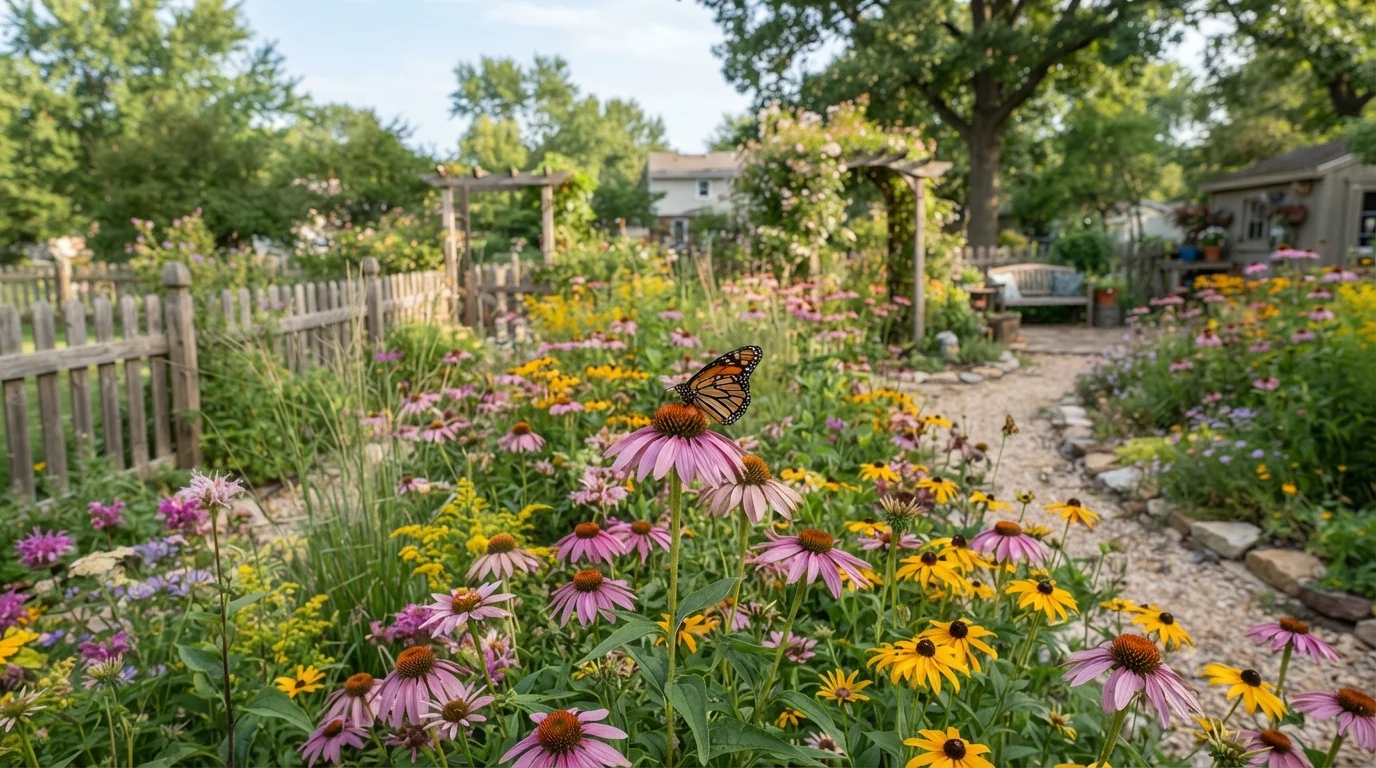
Thoughtful design bridges this gap. Defined edges, a clearly maintained border, and a mix of native plants with reliable ornamental appeal — coneflowers, native asters, switchgrass — can make a native garden look intentional rather than neglected. Incorporating structural elements like paths, defined beds, or low fencing signals to passersby that the planting is deliberate. For more on achieving that balance, our piece on designing a low-maintenance garden that still looks beautiful covers practical landscaping principles that apply well to native schemes.
Native plants also pair naturally with companion planting strategies — grouping species that support one another through pest deterrence or pollinator attraction. See our guide to companion planting for evidence-based pairings that work.
The content on this site is for informational purposes only and is not a substitute for professional advice. Always consult a qualified professional for guidance specific to your situation.