

How to Use This Seasonal Reference
This guide is organized by season so you can quickly find what needs doing in your garden right now. Whether you're managing a large backyard, a modest lawn, or container plantings on a patio, the same seasonal rhythms apply. Climate zones vary across the U.S., so treat timing suggestions as general windows rather than fixed dates - check your USDA Hardiness Zone and local frost dates for precision.
| Seasons covered | Spring, Summer, Autumn, Winter |
| Average U.S. last frost range | Late February (Zone 9) to late May (Zone 5) (USDA Plant Hardiness Zone Map) |
| Recommended soil pH for most plants | 6.0 - 7.0 (Cooperative Extension general guidance) |
| Spring bulb planting window | September - November (before ground freezes) |
| Summer lawn mowing height | 3 - 4 inches |
| Mulch depth for winter insulation | 2 - 3 inches |
Spring: Prepare, Plant, and Feed
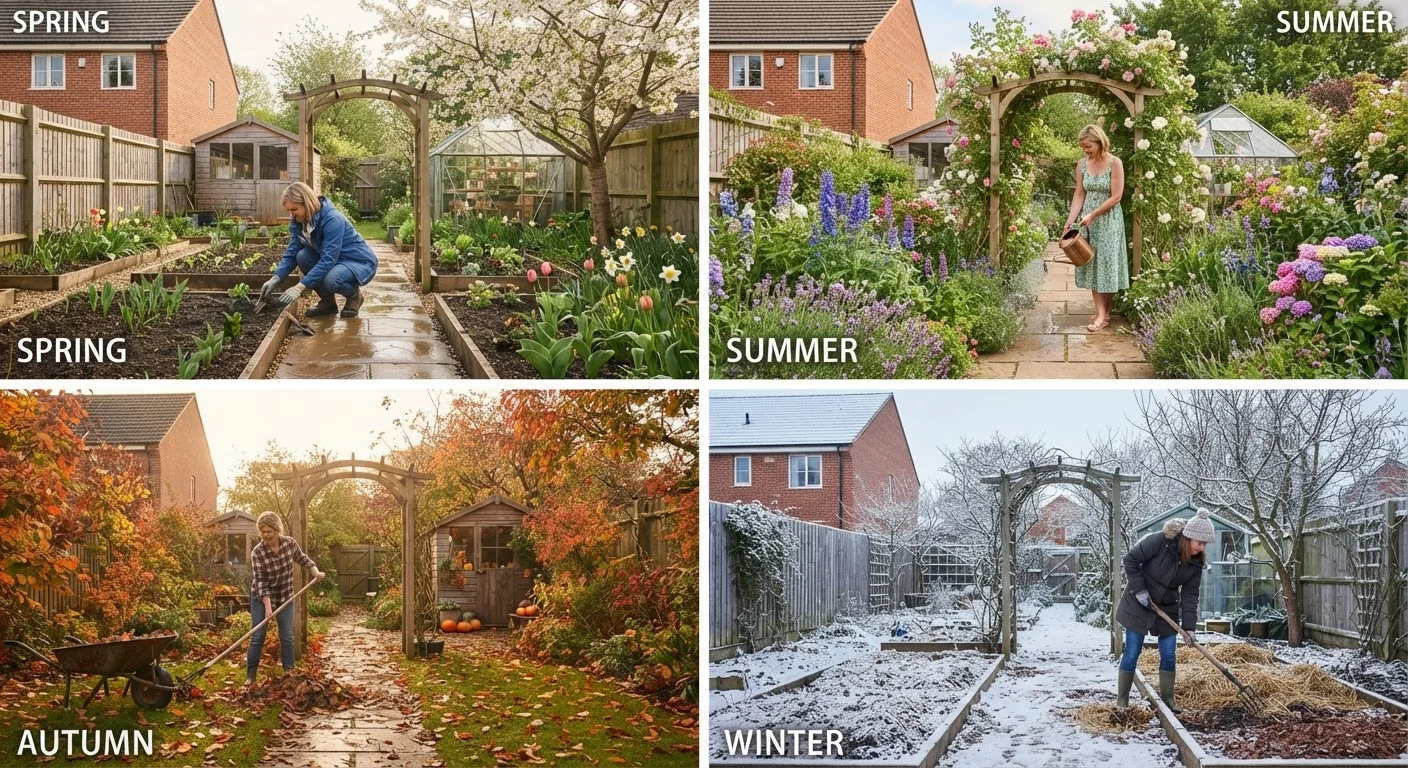
Spring is the season of soil preparation and early planting. As soon as the ground is workable, turn compost into beds to replenish nutrients lost over winter. Test soil pH if you haven't done so in three or more years - a pH between 6.0 and 7.0 suits most edible and ornamental plants.
- Prune late-blooming shrubs (e.g., butterfly bush, rose of Sharon) before new growth appears.
- Divide overcrowded perennials such as hostas and daylilies while shoots are still small.
- Sow cool-season crops (lettuce, spinach, peas) outdoors once soil reaches 40°F.
- Apply a balanced, slow-release fertilizer to lawns once grass begins actively growing.
- Check irrigation systems for leaks or clogged emitters before demand increases.
Spring is also the right moment to plan any structural changes. If you're rethinking your layout entirely, see our guide to designing a low-maintenance garden for landscaping principles that reduce ongoing effort.
Deadheading
The practice of removing spent or faded flowers from a plant. Deadheading redirects the plant's energy from seed production back into new blooms, extending the flowering season.
Soil amendment
Any material added to soil to improve its structure, drainage, or nutrient content. Common amendments include compost, aged manure, perlite, and lime.
USDA Hardiness Zone
A geographic classification system published by the U.S. Department of Agriculture that indicates the average annual minimum winter temperature in a given area. It is widely used to determine which plants can survive winter in a location.
Mulch
A layer of material - such as wood chips, straw, or shredded leaves - spread over soil to retain moisture, regulate temperature, and suppress weeds.
Perennial
A plant that lives for more than two years, typically dying back in winter and regrowing from its root system each spring. Examples include coneflowers, hostas, and ornamental grasses.
Slow-release fertilizer
A fertilizer formulated to break down gradually over weeks or months, providing a steady supply of nutrients rather than a single large dose.
Summer: Maintain and Monitor
Summer maintenance is largely about consistency. Heat and drought stress are the main threats to plants during this period.
- Water deeply and infrequently - most established plants do better with one or two thorough waterings per week than with daily shallow watering.
- Deadhead flowering annuals and perennials to extend bloom time.
- Mow lawns at a higher blade setting (3-4 inches) to reduce moisture loss and discourage weeds.
- Scout for pests and disease weekly; early intervention prevents larger infestations.
- Harvest vegetables regularly to keep plants productive - leaving overgrown crops on the vine signals the plant to stop producing.
Understanding which plants return each year versus which need replanting will help you budget time and money. See annual vs. perennial planning for a full breakdown.
~40°F
Minimum soil temp for most cool-season sowing
Soil thermometers are inexpensive tools that remove guesswork when timing spring seed starts outdoors.
1-2×/week
Ideal deep-watering frequency for established plants in summer
Deep, infrequent watering encourages roots to grow downward, improving drought resilience over shallow daily watering.
3+ years
Recommended soil pH testing interval
Many university extension services suggest testing garden soil every three to five years, or after major amendments.
Autumn and Winter: Clean Up, Protect, and Plan
Autumn sets the foundation for next year's garden. Tasks done well now reduce workload in spring and protect plants through cold months.
- Cut back spent perennials, but leave ornamental grasses and seedheads that provide winter wildlife habitat and visual interest.
- Plant spring-flowering bulbs (tulips, daffodils, alliums) before the ground freezes - typically between September and November depending on your region.
- Apply 2-3 inches of mulch around shrubs and perennial beds after the first hard frost to insulate roots.
- Drain and store hoses and irrigation lines before freezing temperatures arrive.
- Amend beds with compost or aged manure in late autumn so it can break down over winter.
Winter is the ideal time to review garden journals, order seed catalogs, and plan structural projects. This kind of seasonal indoor decluttering and planning pairs naturally with a whole-home reset - the seasonal declutter audit checklist can help you tackle both your garden shed and your indoor spaces at once. For a broader picture of home upkeep across all seasons, the seasonal home maintenance guide covers gutters, HVAC, and exterior checks that often align with garden work.
Regional Timing Will Vary
All seasonal windows in this guide reflect general U.S. conditions. Gardeners in the South and Southwest may begin spring tasks weeks earlier than those in northern states, and winter prep may be minimal in frost-free zones. Always cross-reference with your local Cooperative Extension office for the most accurate planting and frost date information for your county.
The content on this site is for informational purposes only and is not a substitute for professional advice. Always consult a qualified professional for guidance specific to your situation.