

Start here
Choosing the Right Spot
Next
Understanding and Preparing Your Soil
Then
Deciding What to Grow
Into practice
Planting, Watering, and Basic Care
Long game
Keeping Your Garden Going Season to Season
Choosing the Right Spot
Before you buy a single seed, walk your yard at different times of day and observe where sunlight falls. Most vegetables, herbs, and flowering plants need at least six hours of direct sun daily — eight is better. A shady corner may feel like wasted space, but planting sun-lovers there is a reliable path to disappointment.
Beyond light, consider these factors when selecting your plot:
- Access to water: Choose a spot within easy reach of a hose or outdoor spigot. Lugging watering cans across the yard quickly becomes discouraging.
- Drainage: Avoid low-lying areas where water pools after rain. Plant roots need oxygen as well as moisture, and waterlogged soil suffocates them.
- Proximity to trees: Large trees compete aggressively for water and nutrients and cast shade. Keep your garden at least several feet from the drip line of mature trees.
- Level ground: Gently sloped ground is fine, but a steep slope causes water to run off before it soaks in.
USDA Plant Hardiness Zone
A geographic designation that indicates the average annual minimum winter temperature in a region. It helps gardeners choose plants likely to survive local winters and guides planting timing.
pH (soil)
A measure of how acidic or alkaline your soil is, on a scale of 1 to 14. Most vegetables grow best when soil pH falls between 6.0 and 7.0.
Compost
Decomposed organic matter — kitchen scraps, leaves, plant trimmings — that is worked into soil to improve its structure, water retention, and nutrient content.
Cool-season crops
Vegetables that grow and produce best in cooler temperatures, typically spring and fall. Examples include lettuce, spinach, and broccoli. They often bolt (go to seed) in summer heat.
Warm-season crops
Vegetables that need warm soil and air temperatures to thrive and are damaged or killed by frost. Examples include tomatoes, peppers, cucumbers, and squash.
Mulch
A layer of material — such as straw, wood chips, or shredded leaves — spread over soil around plants to conserve moisture, regulate temperature, and reduce weed growth.
If space is limited, raised beds or containers are entirely legitimate options — not consolation prizes. A 4×8-foot raised bed, filled with good growing mix, can outperform a much larger in-ground plot with poor soil.
Understanding and Preparing Your Soil
Soil is not just dirt — it is a living ecosystem that feeds your plants. Most gardening challenges trace back to soil quality, so investing time here pays dividends throughout the growing season.
Test before you amend. Inexpensive soil test kits (available at garden centers and through many cooperative extension offices) measure pH and basic nutrient levels. Most vegetables prefer a slightly acidic to neutral pH, roughly 6.0 to 7.0. Knowing your starting point prevents you from adding amendments you don't need.
Common soil problems and straightforward fixes:
- Compacted or clay-heavy soil: Work in several inches of compost to improve drainage and aeration.
- Sandy, fast-draining soil: Compost also helps here by increasing water retention.
- Low nutrient levels: A balanced granular fertilizer or additional compost can raise organic matter content before planting.
Making your own compost is one of the most cost-effective ways to improve soil year after year. Our guide to composting at home walks through the process step by step, from building a pile to knowing when it's ready to use.
The Finger Test for Soil Moisture
Before watering or amending, press a finger two inches into your soil. If it feels damp and cool, hold off on watering. If it's dry and crumbly at that depth, water deeply. This simple check prevents both overwatering and underwatering — two of the most common beginner mistakes.
Deciding What to Grow
The temptation to plant everything at once is real — resist it. A focused first garden teaches you far more than an overwhelming one. Choose plants suited to your climate, your sun exposure, and — honestly — what you actually eat or enjoy looking at.
For edible gardens, beginner-friendly options include:
- Radishes and lettuce (fast-growing, harvest in weeks)
- Green beans and zucchini (productive with minimal fuss)
- Herbs like basil, chives, and parsley (compact and useful in the kitchen)
For ornamental gardens, consider annuals like marigolds, zinnias, and sunflowers — they bloom generously from seed with little experience required.
Read seed packets and plant tags carefully. They specify sun requirements, spacing, and days to maturity. Crowding plants to fit more in is a very common first-timer mistake; proper spacing allows air circulation and reduces disease pressure.
If a plant isn't thriving, don't assume you've failed — sometimes a variety simply doesn't suit your local conditions. Our article on reading what your struggling plants are telling you can help you decode the symptoms and course-correct.
Planting, Watering, and Basic Care
Timing is everything at planting. Most vegetables are categorized as either cool-season (lettuce, spinach, broccoli — planted in early spring or fall) or warm-season (tomatoes, peppers, squash — planted after frost risk has passed). Your local cooperative extension service publishes last-frost dates for your area, which is the most reliable planting calendar you can use.
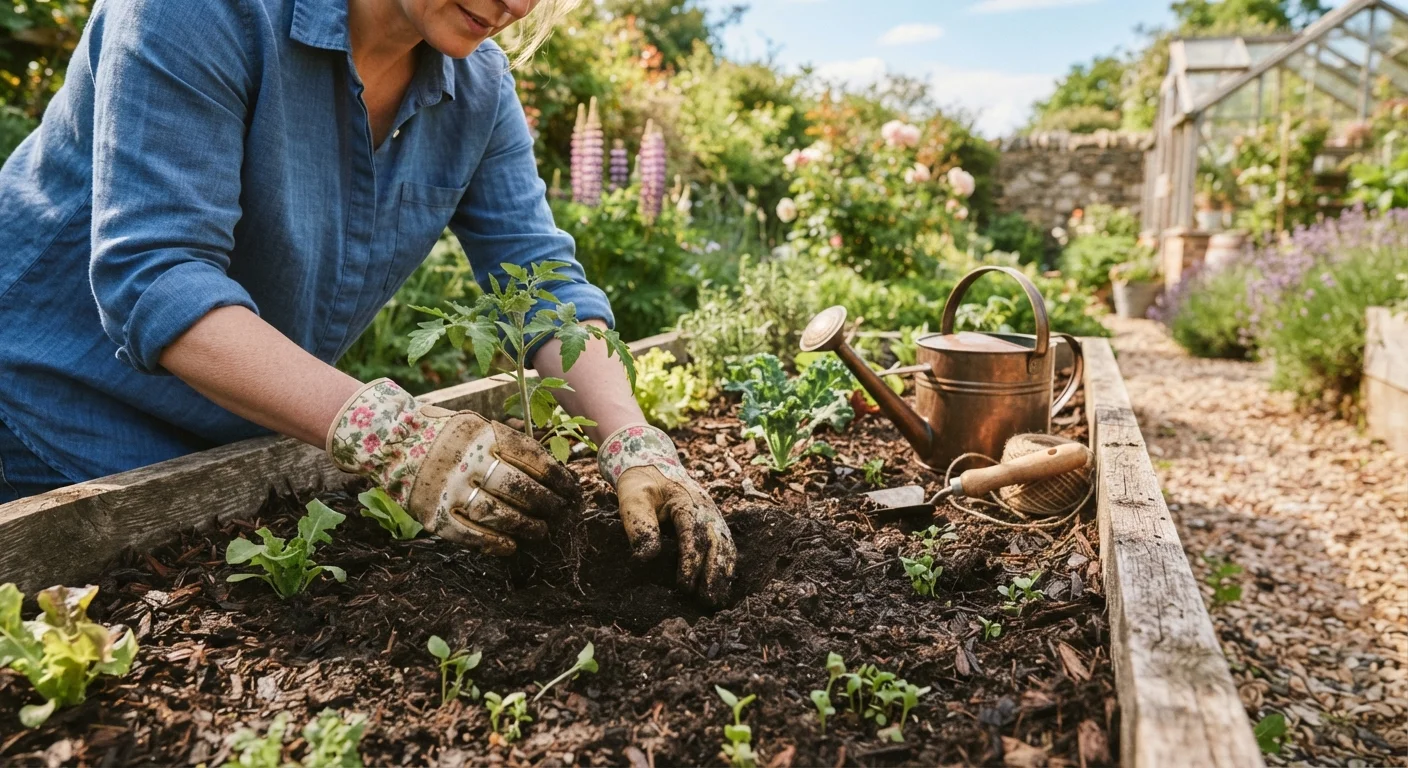
When planting transplants, dig a hole slightly larger than the root ball, set the plant at the same depth it was growing in its container (tomatoes are a notable exception — they can be planted deep), and firm the soil gently around the roots. Water in immediately.
Watering well from the start builds strong plants. Water deeply and less frequently rather than shallowly every day. Deep watering encourages roots to grow downward, making plants more drought-tolerant. The best time to water is morning, so foliage dries before nightfall — wet leaves overnight increases disease risk.
Avoid Overwatering New Transplants
Newly planted seedlings need consistent moisture, but soggy soil is just as harmful as dry soil. Overwatering deprives roots of oxygen and promotes root rot. Always check soil moisture before reaching for the hose, and make sure your planting area or containers drain freely.
Mulching around plants after planting conserves moisture, moderates soil temperature, and suppresses weeds simultaneously. A two- to three-inch layer of straw, shredded leaves, or wood chips around (not touching) plant stems is one of the most useful things a new gardener can do.
Keeping Your Garden Going Season to Season
A garden is never truly finished — it evolves. The habits you build in your first season compound into experience that makes each subsequent year easier and more productive.
At the end of each growing season, resist the urge to completely strip and ignore your beds. Instead:
- Pull spent annuals and add them to your compost pile (avoid composting diseased plant material).
- Top-dress beds with an inch or two of compost before winter to feed soil organisms and improve structure for spring.
- Note what worked and what didn't — a simple paper notebook or phone note is enough.
Planning ahead for the next season is just as important as the care you give during the growing months. For a detailed, month-by-month breakdown of what to do when, our seasonal garden maintenance reference covers pruning windows, soil prep timing, and planting schedules across all four seasons.
Every experienced gardener started exactly where you are now — with an empty patch of ground and a lot of questions. Start small, pay attention to what your plants tell you, and build on each season's lessons. The learning never really stops, and that's a large part of what makes gardening so rewarding.
Frequently Asked Questions
You can grow a meaningful amount of food or flowers in as little as 4×4 feet of raised bed space. Even a few containers on a patio or balcony can produce herbs, lettuce, or tomatoes. Start with what you have and expand once you build confidence.
The ideal start time depends on your local climate and what you want to grow. Most vegetable gardens are planted in spring after the last frost date for your area. Check your USDA Plant Hardiness Zone and seed packet guidance for specific timing.
If your native soil is compacted, sandy, or poor quality, amending it with compost is strongly recommended before planting. For raised beds, a mix of topsoil and compost generally works well. A basic home soil test helps you understand what amendments, if any, your ground needs.
Most garden plants benefit from about one inch of water per week, delivered deeply rather than in frequent shallow sprinkles. Stick a finger two inches into the soil — if it's dry at that depth, it's time to water. Adjust based on rainfall, temperature, and plant type.
Radishes, lettuce, green beans, zucchini, and herbs like basil and chives are commonly recommended for beginners because they germinate quickly and require minimal maintenance. Quick harvests keep motivation high while you learn the fundamentals.
A two- to three-inch layer of organic mulch — such as wood chips or straw — suppresses most weeds by blocking light from reaching the soil surface. Pulling weeds when they are small prevents them from setting seed and multiplying. Consistent weekly garden checks make weeding far less overwhelming.
The content on this site is for informational purposes only and is not a substitute for professional advice. Always consult a qualified professional for guidance specific to your situation.