

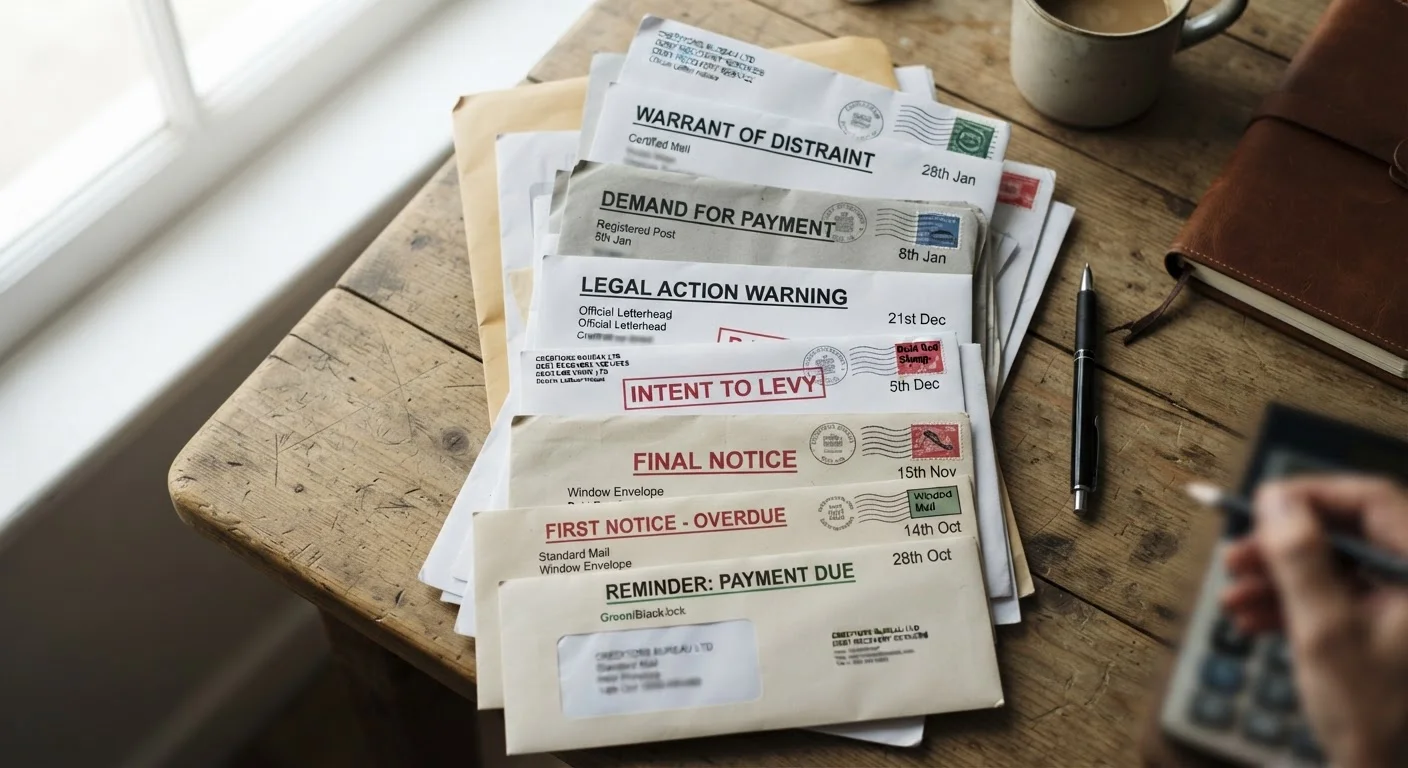
Stage 1: A Missed Payment
The debt lifecycle typically starts simply: a payment due date passes without a payment being made. In the short term, many lenders offer a brief grace period before triggering a late fee — but this varies by lender and loan type. After 30 days, most creditors report the missed payment to one or more of the three major credit bureaus (Equifax, Experian, and TransUnion).
That first late-payment mark on your credit report can lower your credit score meaningfully. The CFPB notes that payment history is the single largest factor in most credit scoring models. At this stage, the creditor typically begins outreach — calls, emails, and letters — attempting to resolve the balance directly.
For borrowers navigating different debt types, it helps to understand the underlying structure. A First Look at Personal Debt explains how different obligations work and what terms like "delinquency" really mean.
7 years
Negative items remain on credit reports
Under the Fair Credit Reporting Act, most delinquencies, charge-offs, and collections can appear on your credit report for up to seven years from the date of first missed payment.
30 days
When late payments hit credit bureaus
Most creditors do not report a payment as late until it is at least 30 days past due, according to CFPB guidance on credit reporting.
120–180 days
Typical charge-off window
Most credit card issuers charge off an account as a loss after 120 to 180 consecutive days of non-payment, per federal banking guidelines.
Stage 2: Delinquency and Creditor Collections
Once a debt is 60 to 90 days past due, it enters a state commonly described as delinquency. Late fees continue to accumulate, and interest may compound on the growing balance. Creditors often escalate contact, and some may offer hardship programs or payment plans at this stage — though nothing is guaranteed.
Between 90 and 180 days of non-payment, two things commonly happen: the account may be charged off internally by the original creditor, and it may be sold or transferred to a third-party debt collector. A charge-off is an accounting designation — it does not erase the debt. The original creditor simply stops expecting payment and may sell the account for cents on the dollar to a collection agency.
Hardship Programs Exist — Ask Early
Many creditors have internal hardship or forbearance programs for borrowers experiencing financial difficulty. These are typically easier to access before an account reaches charge-off status. Contacting the creditor proactively — even if you cannot pay in full — may open options that are no longer available once the account is in collections.
How a debt behaves at this stage can differ significantly depending on whether it is secured or unsecured. Secured vs. Unsecured Debt explains why secured debts like auto loans carry additional risks such as repossession.
Stage 3: Third-Party Debt Collection
When a debt collector takes over, federal law governs how they can contact you. The Fair Debt Collection Practices Act (FDCPA) prohibits collectors from using abusive, deceptive, or unfair practices. Among other protections, it gives consumers the right to request written verification of a debt and to send a written notice requesting that contact stop — though this does not eliminate the debt itself.
The collection account will typically appear as a separate negative entry on your credit report, further affecting your score. The debt can be resold multiple times, meaning different collectors may attempt contact over time.
Your Rights Under the FDCPA
The Fair Debt Collection Practices Act gives consumers specific rights when dealing with third-party debt collectors. You have the right to request written verification of a debt within 30 days of first contact. You can also send a written request asking the collector to stop contacting you — though this does not cancel the debt or prevent a lawsuit. The Consumer Financial Protection Bureau (CFPB) provides free resources explaining these rights in detail.
Stage 4: Legal Action and Judgments
If collection efforts fail, a creditor or debt collector may file a civil lawsuit. If they win — or if the borrower does not respond to the suit — the court issues a judgment. A judgment gives the creditor legal tools to collect that they did not have before, including potential wage garnishment (deducting money directly from paychecks) or, in some states, bank account levies.
Not all debts reach this stage, and the likelihood depends on the debt amount, the creditor's policies, and applicable state laws. It is also worth noting that the statute of limitations — the legal deadline for filing suit — varies by state and debt type. After that window closes, the debt typically cannot be enforced in court, though it may still exist and appear on credit reports.
Understanding how revolving debts like credit cards behave differently from installment loans in these situations is useful context. Revolving vs. Instalment Debt walks through those key differences.
The Longer-Term Picture
Unpaid debt leaves a paper trail that affects borrowing power for years. Under the Fair Credit Reporting Act (FCRA), most negative items remain on a credit report for up to seven years from the date of first delinquency. That can affect the ability to qualify for new credit, rental housing, and in some cases employment.
For borrowers who have reached a difficult point with debt, understanding the full range of structured repayment options is a practical next step. Debt Repayment Methods compares the avalanche, snowball, and consolidation approaches side by side. And for broader context on how debt fits into a financial picture, Good Debt, Bad Debt, and the Grey Area offers useful framing.
This article is for general informational purposes only and does not constitute financial, legal, or tax advice. Debt situations vary significantly by individual circumstances, state law, and creditor policy. Consult a licensed financial adviser, credit counselor, or attorney for guidance specific to your situation.
Frequently Asked Questions
Most lenders report a payment as late to credit bureaus once it is 30 days past due. At that point, it can appear on your credit report and lower your score. The impact tends to be larger the better your score was to begin with.
A charge-off is an accounting action where the creditor writes the debt off as a loss, typically after 120–180 days of non-payment. It does not erase the debt — you still legally owe it, and the account can still be sold to a collector or pursued in court.
Wage garnishment is only possible after a creditor or collector has sued you and obtained a court judgment. Federal law limits how much of your disposable income can be garnished, and some states provide additional protections or exemptions.
Under the Fair Credit Reporting Act (FCRA), most negative items — including late payments, collections, and charge-offs — can remain on your credit report for up to seven years from the date of the first missed payment that led to the delinquency.
The statute of limitations is the window during which a creditor or collector can successfully sue you to collect a debt. It varies by state and debt type, typically ranging from three to six years. After it expires, the debt may still exist but is generally no longer legally enforceable in court.
Unpaid debt generally does not disappear on its own. It may fall off your credit report after seven years and become legally unenforceable after the statute of limitations passes, but the underlying obligation can persist. Bankruptcy is a formal legal process that can discharge certain qualifying debts under court oversight.
The content on this site is for informational purposes only and is not a substitute for professional advice. Always consult a qualified professional for guidance specific to your situation.