

The Basic Structure of Cruise Ship Dining
Food is one of cruising's great pleasures — and one of its most frequently misunderstood features. Most cruise ships organize their dining into two broad categories: included venues (covered in your fare) and specialty restaurants (which typically carry an extra charge). Understanding how these work before you board helps you plan meals, manage expectations, and avoid surprises on your onboard account.
| Main dining room cost | Included in base fare on most ships |
| Specialty restaurant surcharge | Typically $15–$60+ per person, varies by line |
| Buffet availability | Usually open for breakfast, lunch, dinner, and late-night snacks |
| Reservation required | Almost always for specialty restaurants; sometimes for MDR anytime dining |
| Dress codes | Vary by venue and night; formal evenings are common on longer sailings |
If you're new to how ships work in general, our Cruise Travel 101 guide covers the full picture of life onboard — dining included.
Included Dining: What Comes With Your Fare
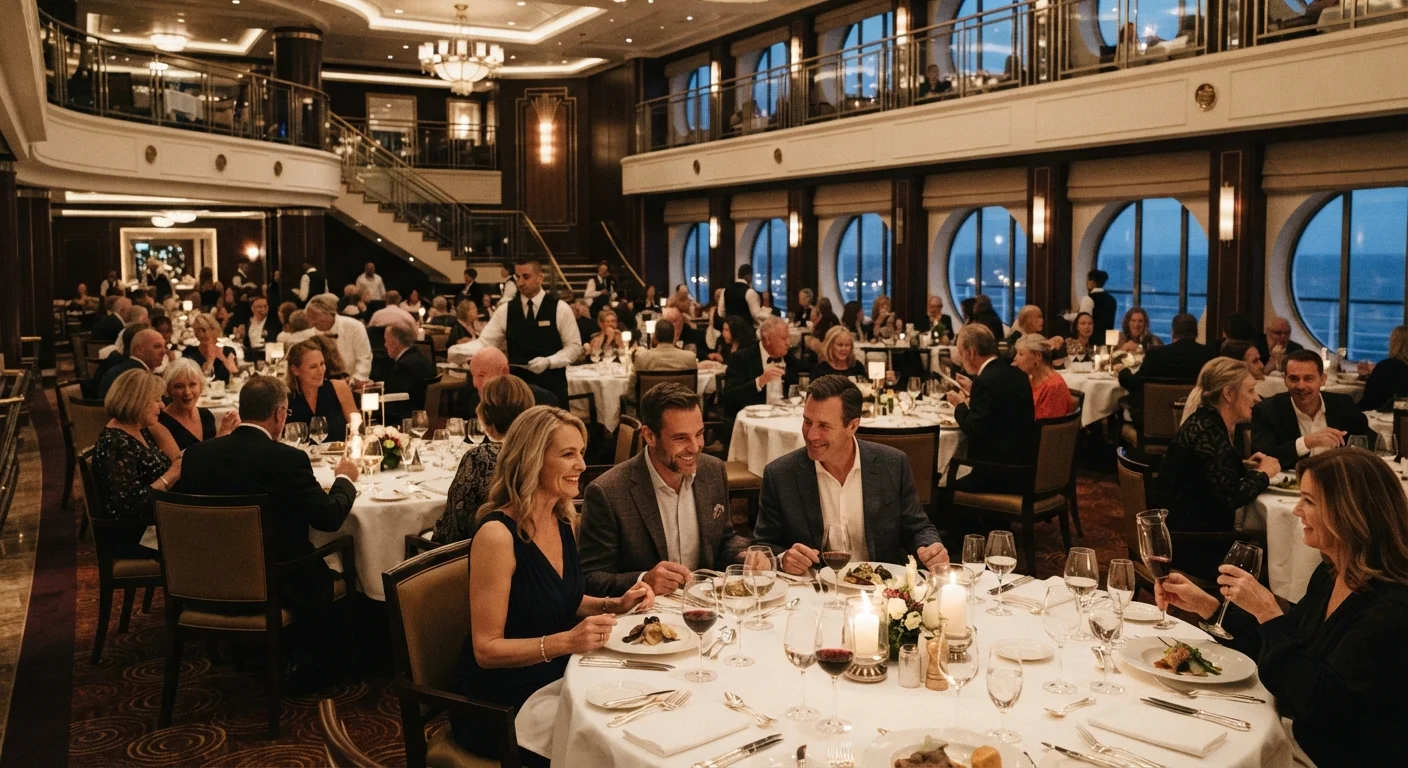
The centerpiece of included dining on most large ocean ships is the Main Dining Room (MDR) — a multi-deck, table-service restaurant that serves breakfast, lunch, and dinner on a rotating menu. Portions are plentiful, service is attentive, and the MDR is generally where passengers experience the most formal shipboard meals.
Nearly every ship also has a buffet-style venue (often called a Lido Deck restaurant or marketplace café), open for most meals and late-night snacks. These are casual, self-serve, and ideal when you want flexibility over a sit-down schedule.
Beyond those two anchors, many ships include additional no-extra-cost spots: poolside grills, pizza stations, burger bars, afternoon tea service, and room service (though room service fees vary by line and ship). The mix depends heavily on the size and style of the vessel — a smaller river ship will have far fewer venues than a mega-ship carrying thousands of passengers. See how ship size affects your overall experience in our river vs. ocean cruise comparison.
Main Dining Room (MDR)
The primary full-service restaurant on a cruise ship, included in the base fare. It typically serves breakfast, lunch, and dinner with waiter service and a rotating menu.
Specialty Restaurant
A themed or cuisine-specific restaurant onboard that charges an additional fee beyond the base cruise fare, usually a cover charge or à la carte pricing.
Anytime Dining
A flexible dining arrangement that lets passengers eat in the main dining room at any time during service hours, rather than at a pre-assigned fixed time.
Cover Charge
A flat per-person fee to dine at a specialty restaurant, separate from individual menu prices. It covers the experience of the venue rather than specific dishes.
Lido Deck
The outdoor or semi-outdoor deck area on many cruise ships that typically houses the main buffet restaurant, pool, and casual food stations.
Specialty Restaurants and Extra-Cost Dining
Most modern cruise ships — particularly large ocean vessels — also operate a collection of specialty restaurants with à la carte or cover-charge pricing. These venues typically offer distinct cuisines (steakhouses, sushi bars, Italian trattorias, teppanyaki grills) and a more intimate atmosphere than the main dining room.
Cover charges generally range from around $15 to $60 or more per person depending on the ship and restaurant concept, though pricing structures vary significantly between cruise lines. Some lines bundle specialty dining credits into higher-tier cabin packages or loyalty program perks. It's worth checking what's included in your specific booking before you sail — dining packages are sometimes sold in advance at a lower per-meal rate than booking onboard.
Solo travelers should note that specialty restaurants are easy to enjoy independently; many offer bar seating or small tables. Our solo cruising guide explores the broader social dynamics of sailing alone.
Dining Times, Reservations, and Dress Codes
Main dining rooms traditionally operate on one of two models: fixed seating (where you're assigned a specific table and dining time each evening) or flexible "anytime" dining (where you show up when you like, sometimes with a reservation). Many lines now offer both options, letting passengers choose at booking.
Specialty restaurants almost always require reservations, which can often be made before sailing through the cruise line's app or website — popular venues fill up fast, especially on sea days. If dining at a particular restaurant matters to you, book early.
Dress codes vary by line and by night. Many ships designate one or two "formal" or "elegant" evenings during a sailing, while the rest are smart casual. Buffets and casual venues generally have no dress requirement beyond basic decorum. Check your specific cruise line's guidelines, as policies differ considerably.
Dining Packages: Worth Considering in Advance
Many cruise lines sell specialty dining packages before sailing at a bundled rate that can be lower than paying per visit onboard. If you're interested in multiple specialty restaurants, researching these packages when you book — rather than waiting until you board — can be worthwhile. Availability and pricing structures vary significantly between lines, so review the details carefully.
Your cabin category can also influence your dining access — suite guests on many lines enjoy exclusive restaurant privileges or priority reservations. Our cabin categories guide breaks down what each tier actually offers.
The content on this site is for informational purposes only and is not a substitute for professional advice. Always consult a qualified professional for guidance specific to your situation.