

Why Cruise Jargon Can Be Confusing
Book a cruise for the first time and you'll quickly find yourself swimming in unfamiliar terminology. What exactly is an embarkation port? Is a tender port something to worry about? And why does your cruise confirmation mention a muster drill?
Cruise lines borrow heavily from maritime tradition, layering in their own hospitality vocabulary on top. The result is a dialect that can feel alienating to newcomers. This guide cuts through that noise with plain, direct definitions of the terms you're most likely to encounter — from booking to disembarkation.
For a broader orientation to how a cruise actually unfolds, see our Cruise Travel 101 guide before diving in here.
Embarkation
The act of boarding the cruise ship at the start of your voyage. The embarkation port is the city from which the ship departs.
Tender Port
A destination where the ship anchors offshore and passengers travel to land via smaller tender boats, because the port cannot accommodate the full vessel dockside.
Muster Drill
A mandatory safety briefing at the start of every sailing where passengers learn emergency procedures and locate their assigned muster station. Required by international maritime law.
Stateroom
The cruise industry's term for a passenger cabin, ranging from interior rooms with no windows to multi-room suites with private balconies.
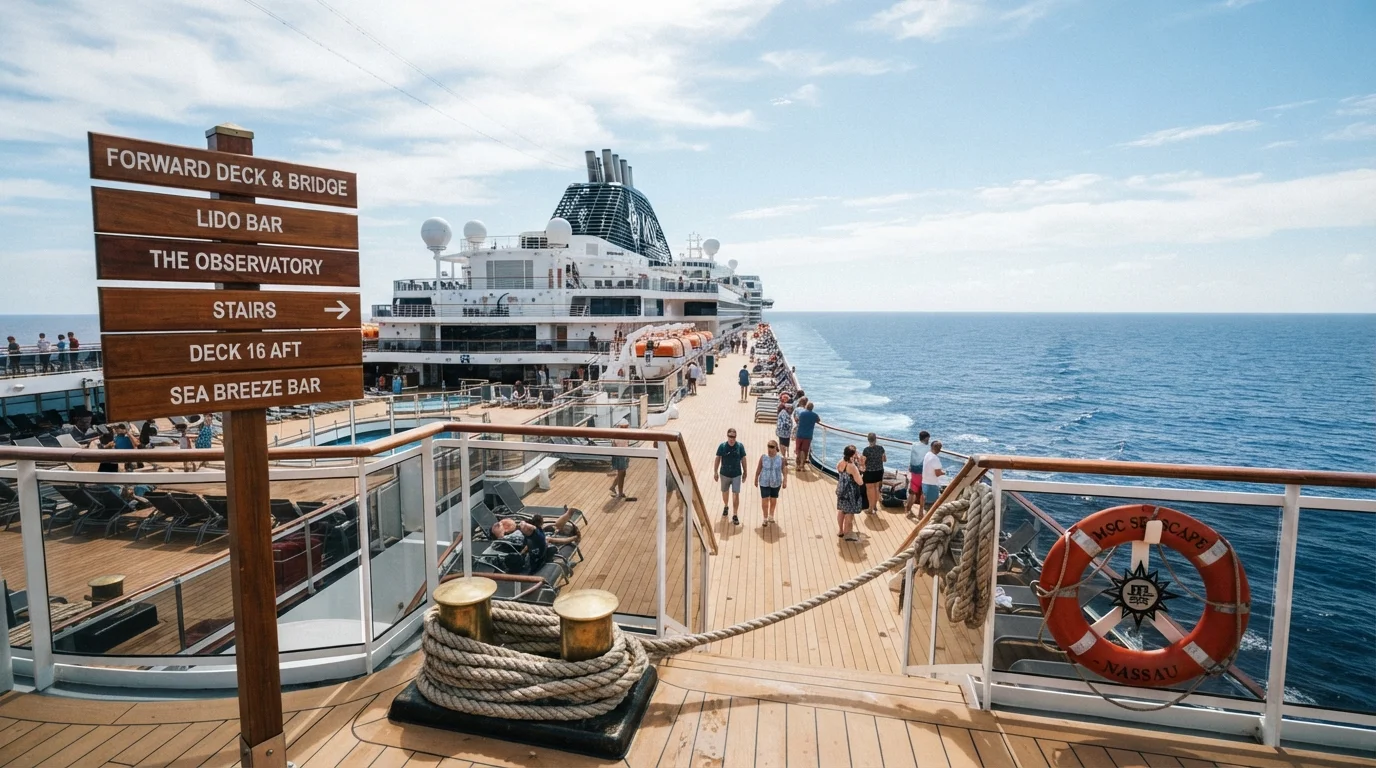
Lido Deck
The primary outdoor deck on most cruise ships, typically home to the main pool, hot tubs, and casual buffet-style dining.
Port of Call
Any destination the ship stops at during the voyage. Passengers typically go ashore here for excursions or independent exploration.
Gangway
The walkway or ramp that connects the ship to the pier, used by passengers to board and disembark at each port.
All-Inclusive Fare
A cruise fare that bundles extras such as beverages, specialty dining, and gratuities into the upfront price, as opposed to a base cruise-only rate.
Key Terms from Embarkation to Debarkation
The journey begins long before you step aboard. Here are the core terms tied to the start and end of your voyage:
- Embarkation: The process of boarding your cruise ship at the start of the voyage. Your embarkation port is the home base city where the ship departs from.
- Debarkation (or Disembarkation): The process of leaving the ship at the end of the cruise. Cruise lines use both spellings interchangeably.
- Homeport: The city or port where a ship regularly begins and ends its itineraries.
- Port of Call: Any destination the ship visits during the voyage — distinct from the homeport.
- Tender Port: A port where the water is too shallow or the dock too small for the ship to tie up directly. Passengers are ferried ashore in smaller tender boats.
- Gangway: The ramp or bridge connecting the ship to the pier, used for boarding and going ashore.
| Mandatory safety exercise | Muster drill before or at departure (International maritime law (SOLAS)) |
| Typical tender boat capacity | 100–150 passengers per trip (General industry standard) |
| Cabin types available | Inside, oceanview, balcony, suite |
| Daily gratuity structure | Charged per person, per day (Varies by cruise line) |
| Formal nights per voyage | Typically 1–2 nights on a 7-night cruise (Varies by line and itinerary) |
Before finalizing a booking, it's worth verifying which ports on your itinerary are tender ports, since rough sea conditions can sometimes prevent tendering altogether. Our pre-booking checklist covers this and other details worth confirming in advance.
Safety, Cabins, and Onboard Life
Once aboard, a second wave of vocabulary kicks in. These are the terms passengers encounter most often during the voyage itself:
- Muster Drill (Lifeboat Drill): A mandatory safety briefing required by international maritime law, held at the start of every voyage. Passengers learn emergency procedures and their assigned muster station — the gathering point during an emergency. Many ships now offer an e-muster option completed via the ship's app before sailing.
- Muster Station: Your assigned assembly point in an emergency. Its location is printed on your key card and posted inside your cabin door.
- Stateroom: The cruise industry term for a passenger cabin. See our cabin categories guide for a breakdown of inside, oceanview, balcony, and suite options.
- Lido Deck: Typically the main outdoor deck featuring the pool, buffet, and casual dining areas.
- All-Inclusive vs. Cruise-Only: Some fares bundle drinks, specialty dining, and gratuities; others cover only the base voyage. Know which you've booked.
- Gratuities / Service Charges: Daily fees added to your onboard account to compensate crew. For a full breakdown of how these work, see our explainer on cruise gratuities and service charges.
- Formal Night: A scheduled evening where passengers are invited to dress up for dinner. Dress codes vary by ship — worth checking before you pack. Our cruise packing guide has specific tips on managing formal-night attire.
Sea Conditions Can Change Port Plans
Even if a port of call is on your itinerary, the captain can skip it or change plans due to weather, rough seas, or other safety factors. Tender ports are especially vulnerable to cancellation if swells are high. It's always worth having a backup plan for shore days, and cruise lines are not obligated to refund port fees if a stop is skipped for safety reasons — though many do provide onboard credit as a courtesy. Check your cruise contract for the specific policy.
The content on this site is for informational purposes only and is not a substitute for professional advice. Always consult a qualified professional for guidance specific to your situation.