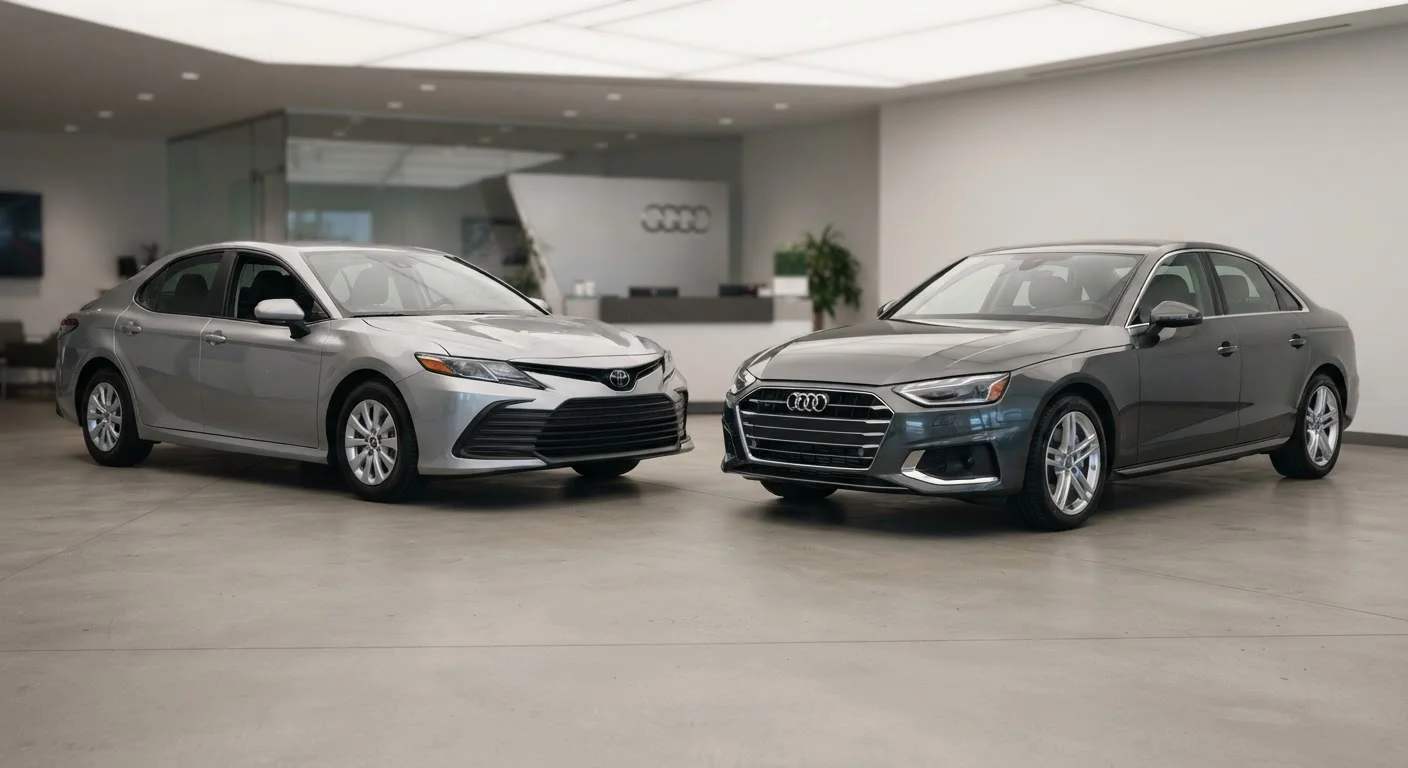
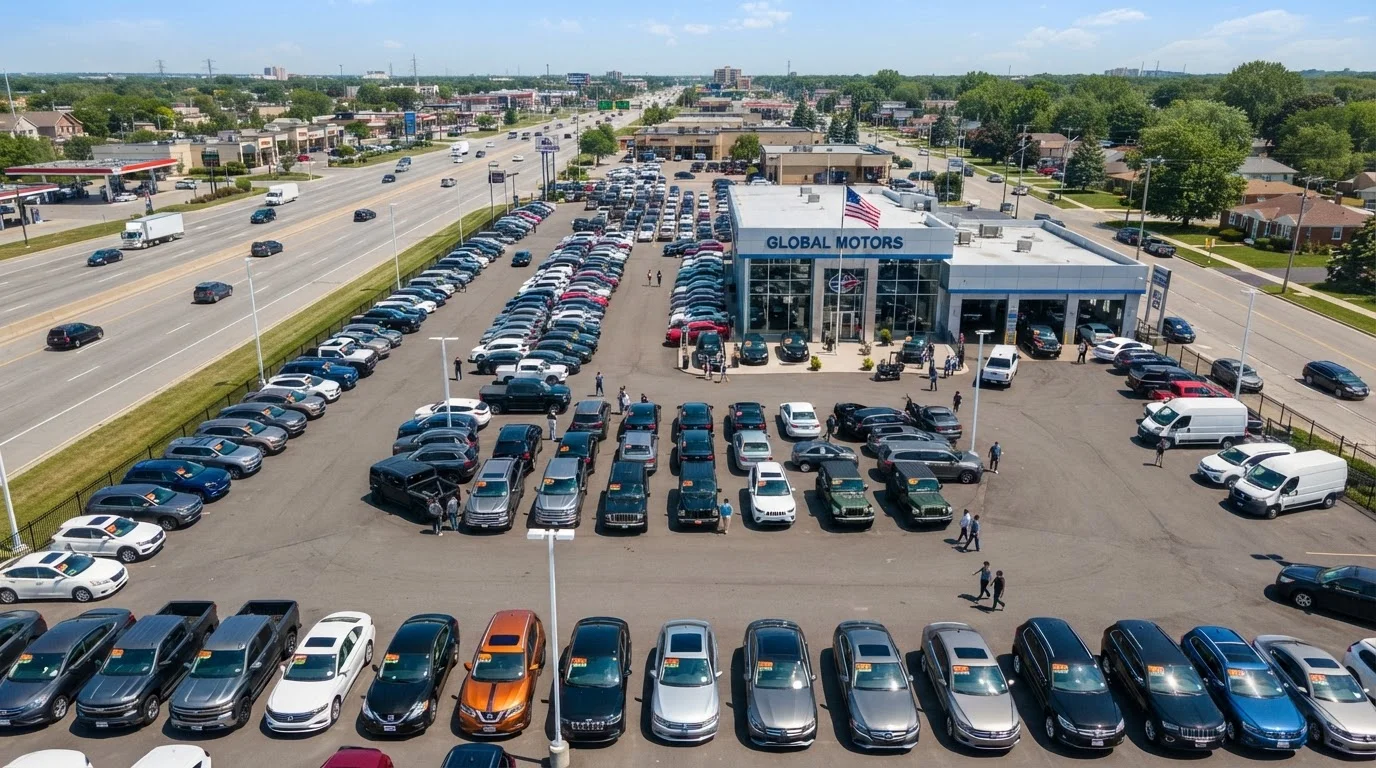
Option A
Domestic Car Brands
The homegrown giants with deep American roots.
Best for: Buyers who prioritize local brand heritage, large vehicle segments like trucks and full-size SUVs, or broad dealer network coverage.
Option B
Import Car Brands
Global manufacturers that reshaped American car culture.
Best for: Drivers drawn to fuel efficiency, compact engineering, or the distinct design philosophies of Japanese, European, or Korean automakers.
How the Domestic vs. Import Divide Took Shape
For much of the twentieth century, "domestic" and "import" had straightforward meanings. Domestic brands - primarily Ford, General Motors, and Chrysler (sometimes called the Big Three) - designed and assembled vehicles almost entirely within the United States. Import brands arrived from abroad: Japanese automakers such as Toyota, Honda, and Nissan entered the American market in significant numbers during the 1960s and 1970s, followed later by Korean brands like Hyundai and Kia, and a long-standing presence from European manufacturers.
The oil crises of the 1970s accelerated import adoption. When fuel prices spiked, compact and fuel-efficient cars - a segment import brands had cultivated carefully - gained rapid consumer interest. Domestic automakers, which had built their reputations on large vehicles, were slower to respond to that shift. The perception gap that formed during that era influenced buying habits for decades.
For deeper context on how different automaking regions developed distinct philosophies, see our overview of global automaking traditions.
| Criterion | Domestic Brands | Import Brands |
|---|---|---|
| Country of brand origin | United States | Japan, Germany, Korea, others |
| Where vehicles are assembled | US, Mexico, Canada (varies by model) | US plants common; also home country |
| Traditional segment strength | Full-size trucks, large SUVs | Compact cars, hybrids, crossovers |
| Hybrid/EV track record | Growing investment, later start | Early movers in hybrid technology |
| US dealer network density | Extensive, especially rural areas | Strong in metro and suburban areas |
| Brand perception shift over time | Rebounded after quality gaps of 1980s-90s | Built long-term reputation for reliability |
Why 'Domestic' and 'Import' No Longer Mean What They Once Did
Beginning in the 1980s, import automakers began building assembly plants inside the United States to reduce shipping costs, navigate trade policy, and serve American consumers more directly. Today, vehicles badged as Toyota, Honda, BMW, and others are routinely assembled in states like Kentucky, Ohio, Alabama, and South Carolina. Conversely, some vehicles sold under American brand names are assembled in Mexico or Canada.
This means the label on the badge and the location where a vehicle was built are often different things. The National Highway Traffic Safety Administration (NHTSA) requires automakers to disclose the percentage of US and Canadian parts content for each model - information published annually in what is commonly called the American Automobile Labeling Act (AALA) disclosure on the window sticker. A shopper who wants to understand a specific vehicle's manufacturing origin can reference that sticker directly.
Reading the Window Sticker for Origin Details
Every new vehicle sold in the US must display an AALA (American Automobile Labeling Act) disclosure on the window sticker. It lists the percentage of US and Canadian parts content and identifies the vehicle's final assembly location. This is the most direct way to understand where a specific vehicle was actually built, regardless of what brand name it carries.
Understanding how corporate ownership layers work can add further clarity - many well-known brands sit under large multinational parent companies. Our article on parent automakers and their sub-brands explains that structure.
What Each Category Tends to Offer Today
Broad generalizations have eroded, but some tendencies persist. Domestic brands - Ford, Chevrolet, GMC, Ram, and others - continue to dominate the full-size pickup truck and large SUV segments, which remain among the highest-volume vehicle categories in the US market. These brands also carry strong brand loyalty in specific regions of the country.
Import-origin brands have built durable reputations in compact and mid-size sedans, crossovers, and hybrid powertrains. Japanese automakers in particular were early and committed investors in hybrid technology, giving them an established track record in that space. Korean brands have moved aggressively upmarket over the past decade, competing on features and warranty terms.
European import brands span a wide range - from mainstream volume manufacturers to brands primarily positioned in the luxury segment. If the luxury dimension interests you, our comparison of luxury and mainstream brands covers what those distinctions actually involve.
Top 3
Best-selling US vehicles are pickup trucks
Ford F-Series, Chevrolet Silverado, and Ram Pickup have consistently ranked as the top-selling individual vehicles in the US market - all from domestic brands.
~50%
US-assembled vehicles sold by import brands
A significant share of vehicles sold in the US by import-origin automakers are assembled in American factories, according to industry manufacturing data.
Regardless of brand origin, the body style you choose shapes your daily experience significantly. Our guide to car body styles breaks down what separates sedans, SUVs, crossovers, and hatchbacks in plain language.
What This Means When You Are Evaluating a Vehicle
For most everyday buyers, the domestic vs. import framing is less useful than it once was. Both categories now compete across virtually every segment, and reliability, ownership costs, and individual model quality vary more within a category than between them. Third-party reliability surveys and government safety ratings assess specific models and model years - those are more actionable than brand origin alone.
Practical factors worth comparing when evaluating any vehicle include: total cost of ownership (fuel, insurance, maintenance), dealer network density in your area, parts availability, and resale value trends for that specific model. Warranties also differ and are worth reading carefully. For broader guidance on vehicle purchasing decisions, see our car buying resource hub.
This article provides general information about automotive brand history and categories. It is not financial or purchase advice. Readers should research specific models and consult qualified professionals as appropriate for their individual circumstances.
The content on this site is for informational purposes only and is not a substitute for professional advice. Always consult a qualified professional for guidance specific to your situation.