

Why pH Controls More Than You Might Expect
Many gardeners assume that if they fertilize regularly, their plants will have everything they need. But nutrients in soil are not always available for plants to absorb — availability depends heavily on pH. When soil is outside a plant's preferred range, certain nutrients become chemically locked up, even when they are physically present in the ground.
Iron, manganese, and phosphorus are particularly sensitive to this effect. In strongly alkaline soil, iron becomes nearly inaccessible, causing yellowing leaves in plants that need it most. In very acidic soil, aluminum and manganese can reach levels that are actually toxic to roots. If your plants are showing signs of stress despite regular feeding, pH imbalance is one of the first things worth investigating. Our article on reading plant distress signals can help you interpret what you are seeing.
6.0–7.0
Ideal pH range for most garden vegetables
According to university extension horticulture resources, this range supports optimal nutrient availability for the majority of common food crops.
~14
Total steps on the soil pH scale
Each whole number on the pH scale represents a tenfold change in acidity or alkalinity, meaning a pH of 5 is ten times more acidic than a pH of 6.
4.5–5.5
pH range preferred by blueberries
Blueberries are among the most pH-sensitive common garden plants; outside this range, they typically fail to absorb iron and show visible signs of nutrient deficiency.
How to Test Your Soil pH
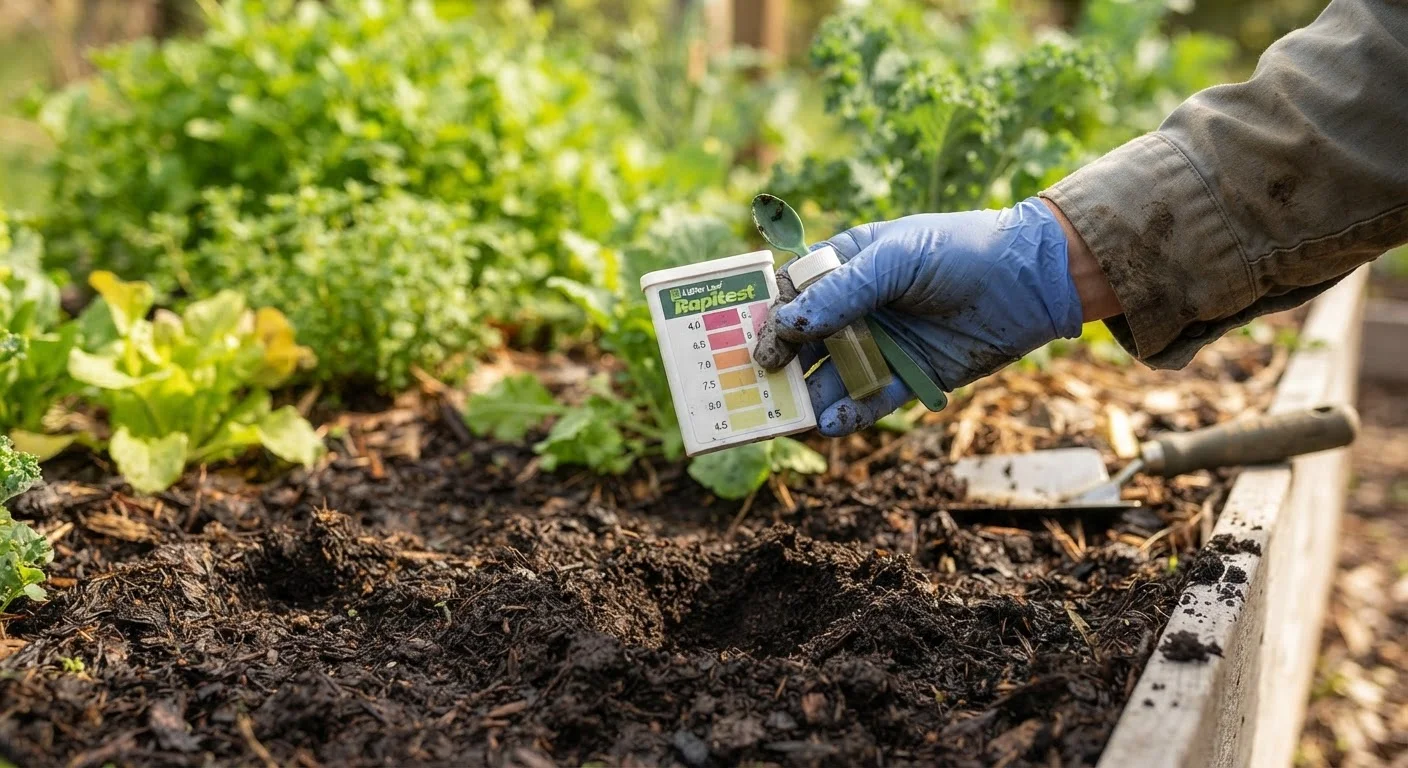
Testing pH does not require specialized knowledge or expensive equipment. There are two practical options for home gardeners:
- Home test kits: Inexpensive kits that use color-indicator strips or liquid reagents give a quick ballpark reading. They are useful for a first check or for monitoring changes after amendments.
- Laboratory soil test: Many university extension programs and local garden centers offer mail-in soil testing for a modest fee. These provide a precise pH reading along with nutrient levels and specific amendment recommendations tailored to your results.
When collecting a sample, take small amounts of soil from several spots around the bed, about four to six inches deep, and mix them together. Testing a combined sample gives you a more representative picture than testing a single spot. For a thorough walkthrough of pre-planting preparation steps, see our garden bed preparation checklist.
Sample from Multiple Spots for Accuracy
Soil pH can vary noticeably within a single garden bed, especially if different areas have received different amendments or have different drainage patterns. Collecting soil from five to eight points across the bed and mixing them before testing gives a far more reliable overall picture than a single sample.
Adjusting Soil pH: Raising and Lowering It
Once you know your pH, you can amend the soil with confidence. The two most common adjustments are:
- Raising pH (making soil less acidic)
- Apply ground limestone (also called garden lime) to acidic soil. Calcitic lime adds calcium; dolomitic lime adds both calcium and magnesium. Work it into the top few inches of soil and water it in. Results take several weeks to a few months.
- Lowering pH (making soil less alkaline)
- Elemental sulfur is the standard amendment for reducing alkalinity. Soil bacteria convert it to sulfuric acid over time. Acidifying fertilizers can also have a modest lowering effect with repeated use.
Always follow the application rates indicated on your soil test results or product label. Over-amendment is a real risk — applying too much lime can push pH too high, creating new deficiencies. Adding homemade compost regularly is a gentler, long-term strategy that supports healthy pH balance while improving overall soil structure.
pH Changes Take Time — Plan Ahead
Soil amendments do not work overnight. Lime and sulfur both require microbial activity and moisture to become effective, which can take anywhere from four weeks to several months depending on soil temperature and composition. For best results, test and amend your soil in autumn so it has the entire off-season to stabilize before spring planting.
Matching Plants to Your Soil's Natural pH
Sometimes the most practical approach is not to fight your soil's natural pH, but to choose plants that are already suited to it. Blueberries and azaleas thrive in acidic conditions. Lilacs and clematis do well in slightly alkaline soil. Understanding what you have naturally allows you to work with your landscape rather than against it.
For gardeners starting from scratch, building raised beds with quality planting mix gives you the ability to set pH from the outset. Our guide on starting a garden from zero covers this and other foundational decisions in detail. Once your pH is stable and your soil is healthy, your choice of fertilizer will also become more effective, since nutrients can actually reach the roots as intended.
Frequently Asked Questions
Most vegetables thrive in a slightly acidic to neutral range of 6.0–7.0. Tomatoes, peppers, and squash fall comfortably in this range. A few crops, like blueberries, prefer more acidic soil around 4.5–5.5, so it helps to research the specific plants you intend to grow.
Testing once every two to three years is generally sufficient for established garden beds. If you have recently amended your soil, moved to a new property, or are seeing unexplained plant problems, testing annually makes sense. Conditions can shift gradually over time.
Not reliably. Amendments like lime or sulfur work over weeks to months, not days. If you discover a significant imbalance right before planting, consider using a raised bed filled with pre-mixed soil while your in-ground soil adjusts over the season.
Mature compost is typically close to neutral (pH 6.5–7.0) and acts as a mild buffer, gently nudging both overly acidic and overly alkaline soils toward the middle. It is generally a safe amendment to add without dramatically shifting your pH.
Natural rainfall leaches basic minerals like calcium and magnesium from the soil, gradually lowering pH. Decomposing organic matter, acidifying fertilizers, and the natural activity of soil microbes can also contribute to increased acidity over time.
The content on this site is for informational purposes only and is not a substitute for professional advice. Always consult a qualified professional for guidance specific to your situation.