

Why Shared Spaces Are Harder to Organize Than Solo Ones
Organizing a home you live in alone is relatively straightforward — you set the rules, you follow them (or don't), and you adjust without negotiating. Add a second person, and the complexity multiplies. Add a third or fourth, and you have a genuinely difficult coordination problem.
The root tension isn't really about cleanliness — it's about differing mental models of what "done" looks like. One person considers a kitchen clean when the dishes are washed. Another considers it clean only when counters are wiped, the dish rack is emptied, and nothing sits on the stove. Neither is wrong. But living together without acknowledging those differences creates constant low-grade friction.
For a broader look at how organization principles apply room by room, see our comprehensive home organization guide. The practices below focus specifically on the human side of shared spaces — the coordination, compromise, and systems that make cohabitation workable.
Proven Practices for Organizing Around Multiple People
These approaches reflect what tends to work in real households — not idealized minimalist showrooms, but lived-in homes where people have different schedules, habits, and priorities.
Establish a shared baseline — not a shared ideal
Trying to get every occupant to adopt one person's organizational ideal rarely works and breeds resentment. Instead, agree on a minimum standard for shared areas: what must always be done, rather than what would be perfect. This lowers the threshold for compliance and reduces the feeling that one person's preferences dominate.
Give every item a designated home that everyone knows
Objects without a fixed place migrate constantly, and different people make different assumptions about where things belong. Designated spots eliminate guesswork and make tidying faster because there's only one right answer for where something goes.
Separate personal storage from communal storage physically
When personal items spill into shared drawers and shelves, communal spaces feel chaotic and contested. Giving each person clearly bounded personal storage — even just a designated drawer or shelf — keeps shared areas cleaner and reduces blame when things go missing or get moved.
Use visible, low-effort systems rather than invisible, high-effort ones
Complex filing systems and multi-step routines only work consistently for the person who designed them. Systems that require less cognitive effort — open bins, labeled hooks, transparent containers — get adopted more reliably across occupants with different organization styles.
Schedule brief, regular household check-ins
Organization issues in shared homes tend to fester because raising them feels confrontational. A short, low-stakes recurring conversation — even five minutes over dinner once a week — normalizes ongoing adjustment and prevents small annoyances from accumulating into larger conflicts.
Rotate or share responsibility for communal tasks explicitly
When no one is clearly responsible for a shared task, it either falls to the most conscientious person consistently — creating unfairness — or it doesn't get done. Explicit assignment removes ambiguity and distributes effort more fairly, even between two people who both want the space to be organized.
If you share multi-purpose rooms — a home office that also functions as a guest room, for example — layering these practices with room-specific strategies becomes especially useful. Our guide on organizing multi-use rooms covers that in depth.
Quick Actions You Can Take This Week
You don't need a full household reorganization to start reducing friction. These small moves create immediate improvement:
Keeping Systems Running Over Time
Make Systems Easy to Use, Not Just Easy to Design
A well-thought-out organization system is only as effective as the people who use it. When designing shared storage, ask whether each person can realistically maintain it without reminders or extra steps. If the answer is no, simplify the system until it's effortless — a hook beats a hanger, and an open bin beats a lidded box for high-traffic shared areas.
Most shared-space organization systems don't fail because they were poorly designed — they fail because life changes and no one updates them. A system built for two people working from home looks different from one built for the same couple once one person starts commuting again. Revisit your shared agreements every few months, not just when something is bothering someone.
It also helps to separate personal standards from communal ones. Each person can organize their own bedroom, closet, or desk however they prefer. The kitchen, bathroom, and living areas are where shared standards matter most — and where the smallest agreements yield the largest dividends in day-to-day comfort.
For households weighing a more pared-down approach, the honest trade-offs of minimalism are worth understanding before committing. And if children are part of the picture, organizing with children in the house offers realistic strategies tailored to that particular challenge.
Open-Plan Layouts Add Complexity
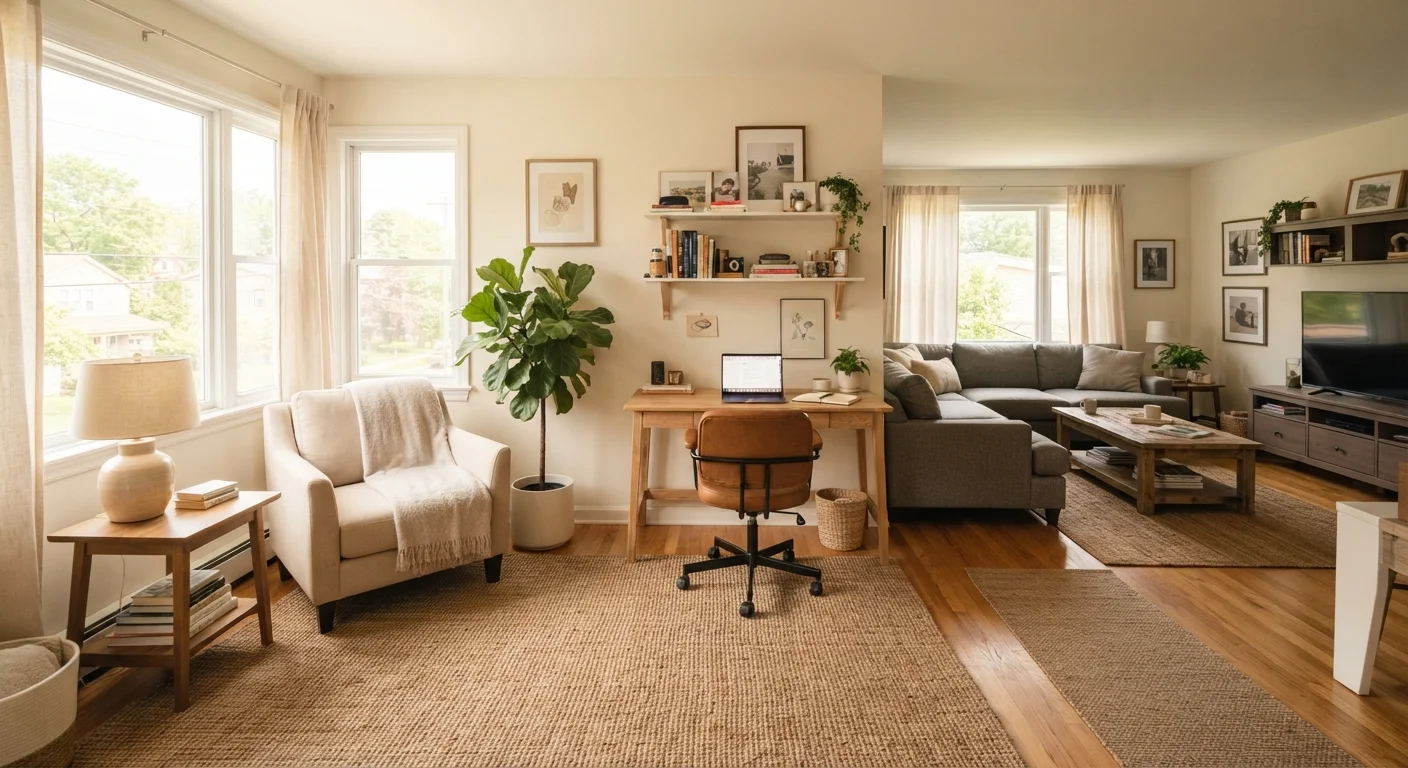
Homes with open floor plans can make shared-space organization trickier, since there are fewer physical boundaries between zones. If your household is weighing a renovation that removes walls, it's worth reading about the real trade-offs of open-plan layouts before committing. Visual separators like rugs, furniture arrangement, and shelving can help define zones without structural changes.
The content on this site is for informational purposes only and is not a substitute for professional advice. Always consult a qualified professional for guidance specific to your situation.