

Our Verdict
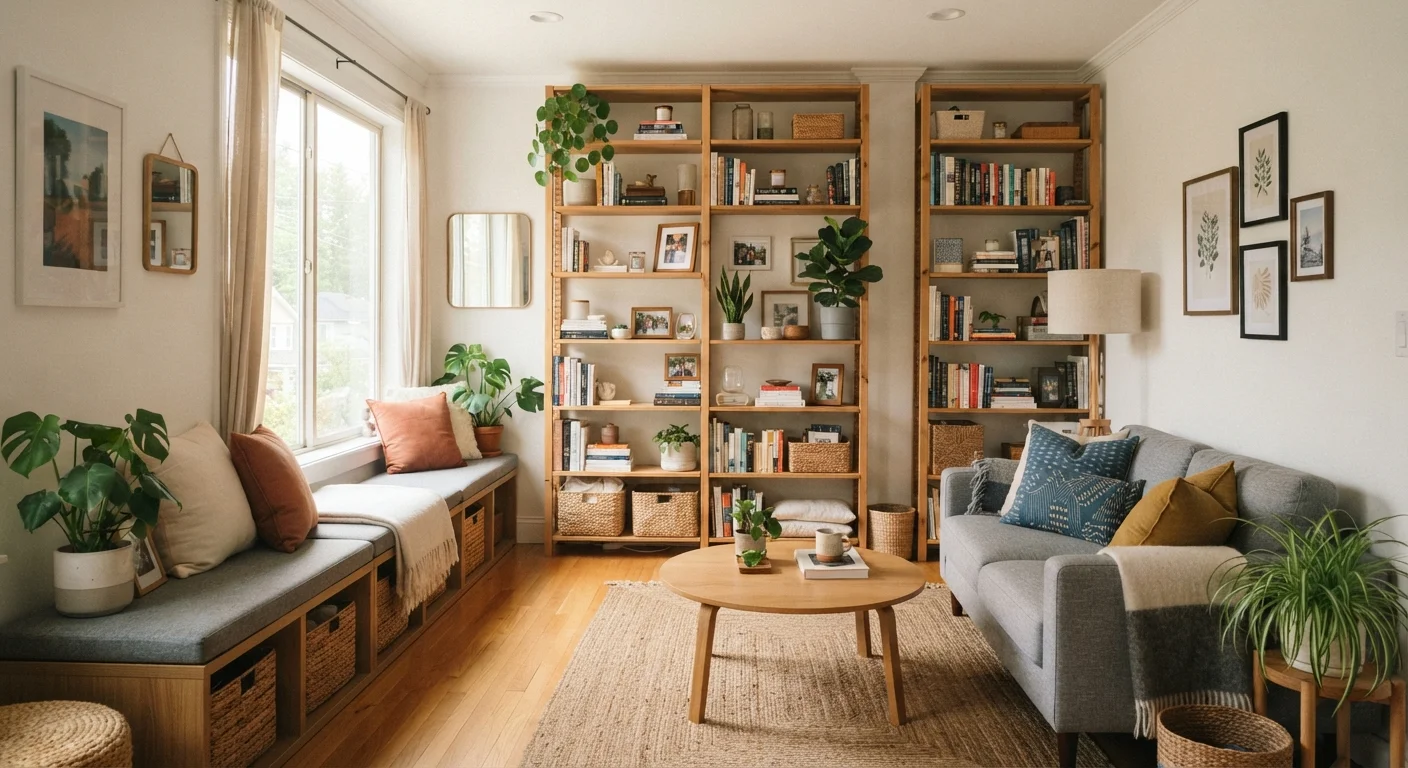
Vertical storage generally wins on raw space efficiency in small rooms, but horizontal storage often beats it for accessibility and everyday usability. For most households, the smartest approach is a deliberate blend — going vertical where walls allow and staying horizontal where ease of reach matters most.
| Best for | Recommended |
|---|---|
| Studio apartments or rooms with limited floor area | Vertical Storage |
| Families with young children or residents with limited mobility | Horizontal Storage |
| Multi-use rooms with competing storage demands | Combined Approach |
| Renters who cannot make permanent wall modifications | Horizontal Storage |
What We Mean by Vertical vs. Horizontal Storage
Vertical storage means organizing upward — using wall height through tall shelving units, wall-mounted racks, pegboards, over-door organizers, and stacked cabinets. Horizontal storage means organizing outward and across — think low dressers, storage ottomans, under-bed bins, and wide credenzas that spread across the floor plane.
The distinction matters because floor space and wall space are not the same resource. A small room may have very little open floor area but several feet of bare wall rising to an eight- or nine-foot ceiling. Choosing which axis to prioritize determines how livable and functional the room becomes. As part of any broader home organization strategy, this decision shapes everything from traffic flow to how easily household members can find and return items. See the complete guide to home organization for a room-by-room look at how these principles apply throughout the house.
The Case for Vertical Storage
The primary advantage of going vertical is that it trades unused wall space — often abundant in small rooms — for storage capacity without shrinking the usable floor area. A floor-to-ceiling bookcase can hold a significant volume of items while occupying only a narrow footprint.
Vertical solutions also tend to make a room feel more intentional. When storage is consolidated upward, more floor remains open, which can make a space feel less cluttered even when it holds the same amount of stuff. This is one reason common organization myths about needing more space to be organized often fall apart — it's rarely about square footage, it's about which dimension you're using.
Vertical storage does have real limitations. Items stored above eye level are harder to reach, which can discourage putting things back in place. Wall-mounted systems may require drilling, making them impractical for renters. And tall, freestanding units must be properly anchored to walls to prevent tipping — a safety step that should never be skipped, especially in homes with children.
Anchor Tall Units to the Wall
Any freestanding shelving unit taller than about four feet should be secured to wall studs using anti-tip hardware or L-brackets. This is a straightforward safety step that prevents tipping accidents, particularly important in homes with children or pets. Many manufacturers include anchoring hardware in the package — use it every time.
The Case for Horizontal Storage
Horizontal storage excels at accessibility. Items stored at waist height or below require no climbing, stretching, or tools to retrieve. This matters considerably in households with older adults, people with mobility limitations, or young children learning to be independent with their belongings. For organizing with children in the house, low bins and wide shelves that kids can reach on their own are often far more effective than stylish vertical towers.
Horizontal furniture also tends to be more structurally stable and can double as functional surfaces — an ottoman stores blankets and serves as extra seating; a low sideboard holds linens and provides a serving area. This multi-use quality is especially valuable in multi-use rooms where every piece needs to earn its place.
The downside is floor footprint. Horizontal storage consumes floor area, which is exactly the resource most scarce in a small space. Stacking horizontal units is possible but can become unstable and visually chaotic if not planned carefully.
| Vertical Storage | Horizontal Storage | |
|---|---|---|
| Floor space used | Minimal — narrow footprint | Larger — spreads across floor |
| Accessibility | Varies — upper shelves harder to reach | Generally easy — waist height or below |
| Weight capacity | Depends on wall anchoring | Typically higher — floor-supported |
| Best for renters | Often requires wall drilling | Usually renter-friendly |
| Child/mobility friendly | Less so without low shelves | Yes — easy reach for all ages |
| Multi-use potential | Low — primarily storage | High — doubles as surfaces or seating |
| Visual impact | Can make rooms feel taller | Can make rooms feel grounded |
How to Combine Both Approaches Effectively
Most small spaces benefit from a layered strategy: anchor one or two vertical elements to maximize capacity, then supplement with low horizontal pieces that serve double duty. A practical starting point is to audit the room's walls before buying any furniture — measure the height, note where outlets, windows, and doors interrupt the wall plane, and identify which stretches of wall could support shelving or cabinets.
From there, assign storage types by how frequently items are used. Daily-use items belong at accessible heights (roughly between knee and shoulder level), whether on a horizontal surface or a mid-shelf. Seasonal or rarely accessed items can move to higher vertical shelves where reaching requires effort but not danger. In shared living situations, agreeing on which zones belong to each occupant — and at what height — reduces the friction that comes from competing storage needs.
Finally, don't overlook transitional spaces like hallways and the backs of doors. These narrow vertical zones are often ignored but can hold hooks, slim shelving, or pocket organizers without competing with primary living areas. For broader home improvement strategies, integrating storage into the room's design from the start is almost always more efficient than retrofitting it later.
Don't Overload Upper Shelves
Storing heavy items high up raises the center of gravity on a shelving unit, increasing tip risk and making retrieval more hazardous. Reserve upper shelves for lightweight, rarely accessed items like seasonal decorations or spare linens. If you find yourself frequently reaching for heavy objects from height, reorganize the shelf layout before an accident occurs.
The content on this site is for informational purposes only and is not a substitute for professional advice. Always consult a qualified professional for guidance specific to your situation.